

The difference between an unknown manuscript and a bestseller often comes down to one thing: marketing. Studies show that documented marketing plans increase success likelihood by over 300%, yet most aspiring authors neglect this critical step. In 2026, AI tools and multi-channel promotion strategies are transforming how writers connect with readers, turning quality content into measurable sales. This guide delivers actionable strategies to boost your book's visibility and revenue through data-driven marketing.
Table of Contents
- Why Book Marketing Matters in 2026
- Harnessing AI and Automation in Book Marketing
- Multi-Channel Promotion Strategies for Maximum Reach
- Common Misconceptions and Pitfalls in Book Marketing
- Measuring Success: Metrics That Matter in Book Marketing
- Practical Steps for Authors to Start Marketing Their Books
- Bridging Book Creation to Marketing Success
- Discover Librida's AI-Powered Publishing Platform
- Frequently Asked Questions About Book Marketing
Key Takeaways
| Point | Details |
|---|---|
| Marketing plans boost success by 313% | Authors with documented strategies see over 300% higher success rates than those without formal plans. |
| AI tools enhance personalization and reach | Over 60% of campaigns now use email automation, and 63% of marketers leverage generative AI for personalized content. |
| Multi-channel promotion raises sales 30-50% | Integrating TikTok, Instagram, email, and Amazon ads delivers significantly higher sales than single-channel approaches. |
| Balanced paid and organic ads deliver best ROI | Amazon Ads can achieve 2-4x ROI when combined with organic social engagement and targeted retargeting. |
| Tracking metrics refines campaigns effectively | Monitoring click-through rates, email growth, and detailed reviews guides ongoing optimization. |
Why Book Marketing Matters in 2026
The harsh reality is that only 1 to 2% of new books achieve commercial success without a structured marketing approach. Writing a brilliant story is just the first step. Without visibility, even exceptional work remains undiscovered by the readers who would love it most.
A clear documented marketing plan for books improves your odds dramatically. Research confirms that authors with formal strategies see success rates jump by over 313%. This isn't about luck; it's about intentional audience building and consistent outreach.
Consider the current reading landscape. Print books still dominate, with 65% of adults preferring physical formats. Yet digital formats and audiobooks continue growing. Each format requires tailored promotion to reach its audience effectively.
Key reasons marketing is non-negotiable:
- Reader awareness drives sales: Quality content without visibility generates zero revenue.
- Competition is fierce: Thousands of new titles launch monthly, making differentiation essential.
- Algorithm optimization matters: Platforms like Amazon reward books with strong engagement signals.
- Long-term brand building: Consistent marketing establishes author authority and backlist sales.
Marketing is no longer optional for authors. It's the bridge between creation and commerce, transforming passion projects into sustainable income streams.
Strategic marketing shifts reader awareness into actual purchases, building momentum that carries beyond launch day. Authors who integrate promotion early create compounding advantages in discoverability and revenue.
Harnessing AI and Automation in Book Marketing
AI technology has revolutionized how authors execute marketing at scale without sacrificing personalization. The data is compelling: over 60% of book marketing campaigns now use email automation, and these systems can increase customer lifetime value by 29%.

Email remains one of the highest-converting channels for authors. AI-powered platforms analyze reader behavior to send targeted messages at optimal times, dramatically improving open rates and click-throughs. Instead of generic newsletters, you deliver personalized recommendations based on reader preferences and past engagement.
Generative AI expands your content creation capacity exponentially. 63% of marketers use generative AI for personalized marketing content in 2026. These tools help you produce social media posts, ad copy, blog articles, and book descriptions at a pace impossible through manual writing alone.
Practical AI applications for book marketing:
- Hyper-personalized email sequences: Segment readers by genre preference and engagement level for targeted messaging.
- Automated social media scheduling: Generate and schedule weeks of content in hours using AI writing assistants.
- Ad copy optimization: Test multiple variations rapidly to identify highest-converting messages.
- Reader insights analysis: Process review sentiment and feedback to refine positioning and messaging.
Pro Tip: Start with one AI marketing tool for authors focused on your biggest time drain, whether that's social content or email campaigns. Master it before expanding to additional platforms.
Platforms like Librida integrate AI-empowered marketing examples directly into the publishing workflow, allowing authors to plan promotion alongside manuscript development. This integration ensures consistent messaging from concept through launch and beyond.
The key is balancing automation with authentic voice. AI handles repetitive tasks and data analysis, freeing you to focus on genuine reader relationships and creative content that showcases your unique perspective.
Multi-Channel Promotion Strategies for Maximum Reach
Single-channel marketing severely limits your potential audience. Authors who integrate TikTok, Instagram, email, and Amazon ads see 30 to 50% higher sales than those relying on one platform alone.
Each channel serves distinct purposes in the reader journey. Social media builds awareness and community. Email nurtures relationships and drives conversions. Paid advertising accelerates discovery among targeted demographics. The magic happens when these channels work together, creating multiple touchpoints that reinforce your message.
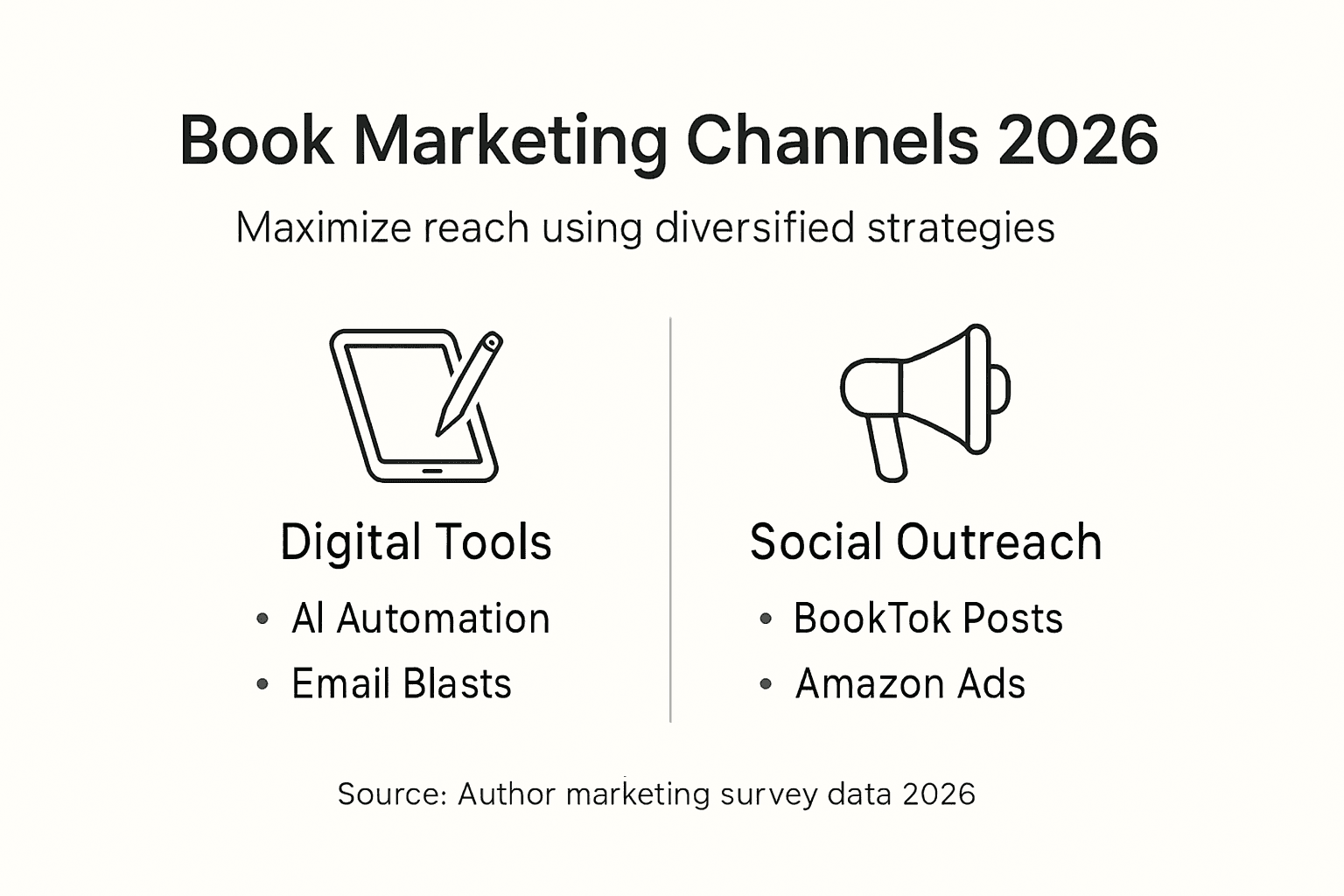
Amazon Ads deserve special attention for self-published authors. When properly targeted, these campaigns can deliver 2 to 4 times return on investment. The platform's data allows precise audience targeting based on reader behavior, genre preferences, and competitor book engagement.
Pro Tip: Allocate 60% of your ad budget to retargeting campaigns focused on readers who've viewed your book page but haven't purchased. These warm leads convert at significantly higher rates than cold traffic.
Effective multi-channel tactics:
- TikTok for discovery: Short-form video content reaches younger demographics and can go viral unexpectedly.
- Instagram for visual storytelling: Behind-the-scenes content and aesthetic posts build emotional connections.
- Email for conversions: Direct communication with subscribers generates the highest sales per contact.
- Amazon Ads for targeted reach: Precision targeting captures readers actively searching for your genre.
| Channel | Primary Benefit | Best Use Case | Average ROI |
|---|---|---|---|
| TikTok | Viral potential | Building awareness among Gen Z readers | Variable, high upside |
| Visual engagement | Genre-specific aesthetic communities | Moderate, consistent | |
| Direct conversion | Launching to engaged subscribers | High, predictable | |
| Amazon Ads | Targeted discovery | Reaching active book buyers | 2-4x when optimized |
Influencer partnerships amplify reach beyond your existing audience. BookTok creators and bookstagrammers have dedicated followings who trust their recommendations. Strategic collaborations introduce your work to thousands of qualified readers.
Successful multi-channel book marketing examples demonstrate how coordinated campaigns create momentum across platforms, with each channel reinforcing the others to build sustained visibility and sales velocity.
Common Misconceptions and Pitfalls in Book Marketing
Many authors waste resources chasing metrics that don't correlate with sales. High social media follower counts or viral posts feel impressive but rarely translate directly to book purchases without strategic conversion tactics.
The review rating myth persists despite clear data showing that 4.4 to 4.7 star average reviews convert better than perfect 5-star ratings. Readers perceive perfect scores as potentially fake or overly niche. Ratings in the sweet spot signal broad appeal with honest feedback.
Common marketing mistakes to avoid:
- Focusing solely on vanity metrics: Likes and shares matter less than click-through rates and conversion percentages.
- Neglecting email list building: Social platforms can disappear or change algorithms overnight; your email list is owned media.
- Running ads without testing: Launching one ad variant wastes budget; A/B testing identifies what resonates.
- Expecting instant results: Sustainable book marketing compounds over months, not days.
| Misconception | Reality | Impact |
|---|---|---|
| Quality writing sells itself | Marketing is essential regardless of quality | Lost sales opportunity |
| Perfect 5-star reviews are best | 4.4-4.7 stars convert better | Lower conversion rates |
| More followers = more sales | Engaged community matters more than size | Wasted effort on vanity metrics |
| One viral post solves everything | Consistent presence builds sustainable sales | Unreliable revenue |
Another pitfall is launching marketing only at publication. Books with high review counts but low Amazon impressions signal poor discoverability, not quality issues. Book marketing myths corrected by data show that consistent promotion over time generates far better results than launch-week sprints.
Many authors also underestimate the importance of professional presentation. Amateur cover design and poorly formatted book descriptions create friction that prevents conversions, even when your marketing successfully drives traffic. Every element must work together to convert interest into purchases.
Understanding these common book marketing mistakes helps you allocate resources toward strategies that actually move the needle on visibility and revenue.
Measuring Success: Metrics That Matter in Book Marketing
Effective marketing requires tracking the right data points and adjusting based on insights. Vanity metrics like total page views or social media impressions tell an incomplete story without conversion context.
Start with reader engagement quality over quantity. Detailed reviews with specific praise or constructive feedback indicate genuine reader investment. These reviews influence purchase decisions far more than star ratings alone.
Conversion rates improve with targeted keyword and metadata optimization; monitoring these metrics guides tactical adjustments. If your Amazon ad impressions are high but clicks are low, your cover or title needs work. If clicks are strong but conversions lag, your book description or preview pages require improvement.
Critical metrics to track consistently:
- Email subscriber growth rate: Indicates expanding reach and interest in your work.
- Click-through rates on ads and links: Measures how compelling your messaging and creative assets are.
- Conversion percentage by channel: Identifies which platforms deliver actual sales versus just traffic.
- Reader engagement depth: Time on page, preview reads, and review detail level signal quality interest.
- Cost per acquisition: Ensures paid marketing remains profitable as you scale campaigns.
Email list health deserves particular attention. Growing your subscriber base by even 50 to 100 readers monthly creates compounding advantages for future launches. Each new subscriber represents a direct line to a potential buyer who's already expressed interest in your content.
Adjust your marketing tactics based on data patterns. If Instagram drives high engagement but low conversions, experiment with stronger calls to action or direct purchase links. If email campaigns show declining open rates, test new subject lines or sending times.
Understanding key book marketing metrics transforms guesswork into strategic decision-making, allowing you to double down on what works and cut what doesn't.
Practical Steps for Authors to Start Marketing Their Books
Building an effective marketing system doesn't require a massive budget or technical expertise. Start with foundational elements and expand as you gain experience and resources.
Your author website serves as your digital home base. Create SEO-optimized author sites that link all your platforms, showcase your books with compelling descriptions, and capture email subscribers through lead magnets like free chapters or exclusive content.
Amazon Author Central remains underutilized despite its direct impact on discoverability. Update your profile with professional photos, detailed biography, blog feed integration, and links to all your titles. This free tool enhances your credibility and creates additional pathways for readers to discover your backlist.
Pro Tip: Develop your building your book marketing plan at least three months before publication. This timeline allows for audience building, advance review copies, and launch momentum.
Step-by-step marketing launch sequence:
- Establish your author platform with website and social media profiles three to six months pre-launch.
- Build your email list through lead magnets and consistent content sharing.
- Leverage AI marketing tools for authors to automate content creation and scheduling.
- Set up Amazon Author Central and optimize all book metadata with targeted keywords.
- Launch coordinated campaigns across email, social media, and paid ads at publication.
- Continue consistent promotion post-launch with weekly content and ongoing ad optimization.
AI platforms streamline the most time-consuming tasks. Use them for ad targeting refinement, content personalization, and audience segmentation. This automation allows you to maintain consistent marketing presence without overwhelming your schedule.
Consistency matters more than perfection. Regular email newsletters, even monthly, keep you connected with readers. Weekly social media posts maintain visibility. Small, sustainable efforts compound into significant results over time.
Start small and expand systematically as you identify what resonates with your specific audience. Marketing mastery is an iterative process of testing, learning, and refining.
Bridging Book Creation to Marketing Success
The most successful authors integrate marketing thinking throughout the writing and publishing process, not as an afterthought. This alignment ensures your messaging remains consistent and your audience understands exactly what value your book delivers.
Starting marketing plans alongside writing allows you to build anticipation and gather reader input that can inform final revisions. Share character development insights, setting research, or thematic exploration as you write. This transparency builds investment in your creative journey.
Continual marketing generates sustained sales beyond the initial launch spike. Marketing starts alongside book development to align messaging, and successful campaigns build backlist value that compounds over years. Each new release introduces readers to your entire catalog, creating multiple revenue streams.
Long-term perspective matters:
- Backlist momentum: Older titles gain renewed interest with each new release and ongoing promotion.
- Author brand equity: Consistent marketing establishes you as a recognized voice in your genre.
- Reader relationship depth: Ongoing engagement creates loyal fans who purchase immediately at launch.
- Marketing efficiency gains: Skills and systems developed for one book transfer to future projects.
Your marketing mix must address both print and digital formats. While 65% of adult readers prefer print books, digital and audio formats capture different reading occasions and demographics. Each format requires tailored promotion to its natural audience.
Data-driven marketing builds long-term readership and predictable revenue. Track what works, eliminate what doesn't, and continuously refine your approach based on actual results rather than assumptions. This systematic improvement creates sustainable author careers.
An integrated book marketing approach connects creation, publication, and promotion into a cohesive system where each element reinforces the others. This holistic view transforms writing from a one-time project into a scalable business.
Discover Librida's AI-Powered Publishing Platform
Turning marketing strategies into action requires the right tools and support. Librida provides AI-powered solutions that integrate book creation with intelligent marketing capabilities, helping authors navigate every stage from concept to sustained sales.

The platform combines generative writing assistance with data-driven promotion tools. Access Librida's AI marketing tools to automate content creation, personalize reader outreach, and optimize your marketing campaigns based on performance analytics. These resources put enterprise-level marketing capabilities in the hands of independent authors.
Librida's integrated approach connects your creative work with audience building. Explore AI-driven books on Librida to see how authors successfully combine innovative storytelling with effective promotion strategies. Learn from real examples of multi-channel campaigns that drive measurable results.
The platform's blog offers ongoing education and insights. Visit Librida's publishing platform for articles on emerging trends, tactical guides, and case studies that help you refine your marketing approach as the industry changes. Stay ahead of algorithm updates and reader behavior shifts with expert analysis.
Librida empowers authors to focus on what they do best while AI handles the repetitive tasks that consume time without adding creative value. This partnership between human creativity and machine efficiency defines successful publishing in 2026.
Frequently Asked Questions About Book Marketing
What is the most cost-effective way to start marketing my book?
Start with email list building and organic social media before investing in paid advertising. Create valuable content that showcases your expertise and personality, then capture interested readers through a simple lead magnet like a free chapter or short story.
How much time should I spend on book marketing versus writing?
Allocate 20 to 30% of your working hours to marketing once your book is published. During pre-launch, dedicate time to building your platform and email list while still prioritizing manuscript completion.
Can AI tools really replace professional marketers?
AI tools enhance your capabilities but don't replace strategic thinking or authentic voice. Use them for automation, data analysis, and content scaling while you focus on creative decisions and genuine reader relationships.
How long does it take to see results from book marketing?
Consistent marketing typically shows measurable results within three to six months. Launch spikes are temporary; sustainable success requires ongoing effort that compounds over time through audience growth and backlist momentum.
What's the single most important marketing metric to track?
Email subscriber growth combined with conversion rate provides the clearest picture of marketing effectiveness. These metrics indicate both reach expansion and messaging quality that drives actual purchases.
Should I focus on one marketing channel or spread efforts across multiple platforms?
Multi-channel approaches deliver 30 to 50% higher sales than single-platform strategies. Start with two channels you can maintain consistently, then expand as you develop efficient systems and see initial results.