

Many aspiring authors struggle with inconsistent character development, a challenge that feedback surveys show affects 35% of writers. Creating believable, dynamic characters requires more than inspiration. It demands a systematic approach covering prerequisites, execution steps, common pitfalls, and success metrics. This guide walks you through each stage to build compelling characters that resonate with readers and drive your story forward.
Table of Contents
- What You Need Before You Start: Prerequisites And Tools
- Understanding Your Story's Core Truth
- Defining Character Goals And Arcs
- Balancing Strengths And Flaws In Characters
- Tools And Templates For Character Development
- Common Mistakes And Troubleshooting
- Expected Timelines And Planning For Character Development
- Measuring Success: How To Know Your Characters Work
- Unlock Your Story's Potential With Librida Tools
- Frequently Asked Questions About Character Development
Key Takeaways
| Point | Details |
|---|---|
| Structured character development improves consistency and reader engagement significantly | Following a systematic process prevents the disconnects that plague 35% of writers |
| Templates and AI tools accelerate creation while maintaining depth | Digital resources track complex attributes and flag inconsistencies quickly |
| Common pitfalls include flat characters and misaligned growth arcs | Awareness of typical mistakes helps writers avoid reader confusion early |
| Success requires dedicated time blocks and iterative refinement cycles | Quality character development takes 1-3 weeks per main character for beginners |
| Measure effectiveness through reader engagement and consistent feedback | Emotional responses and beta reader reactions reveal if characters truly work |
What You Need Before You Start: Prerequisites and Tools
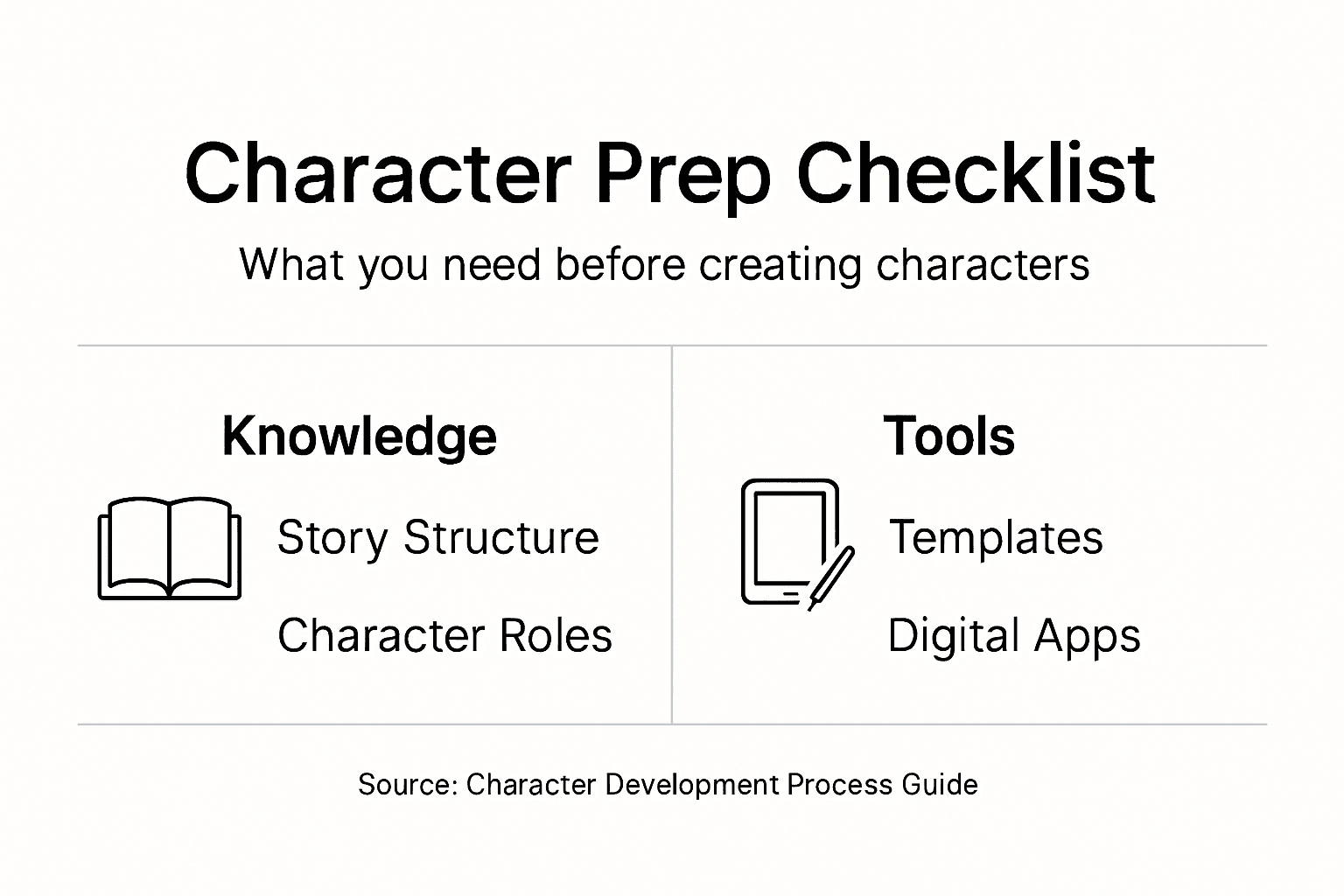
Before diving into character creation, you need foundational knowledge about narrative structure and character roles. Understanding archetypes like the hero, mentor, or trickster gives you a framework for building distinct personalities. Familiarity with basic storytelling elements including motivation, conflict, and transformation ensures your characters serve the plot effectively.
Access to character development templates or digital tools is essential. Whether you prefer spreadsheets, dedicated software, or AI-assisted character development tools, having a system to track traits, backstories, and growth prevents inconsistencies. These resources become your reference points throughout writing and revision.
Allocate dedicated time for reflective work. Character development isn't a one-sitting task. It requires iterative thinking, testing decisions against your story's logic, and refining details. Schedule uninterrupted blocks where you can immerse yourself in understanding who your characters truly are.
Pro tip: Start using AI tools early in your process. They accelerate initial creation, suggest trait combinations you might overlook, and catch inconsistencies before they become embedded in your draft. Early adoption reduces errors and speeds up revision cycles significantly.
Gathering these prerequisites creates a solid foundation. With tools ready and knowledge in place, you're positioned to follow the starting steps for implementing character development process effectively and avoid common beginner mistakes.
Understanding Your Story's Core Truth
Every compelling story has a non-negotiable core truth, a thematic anchor that guides every plot decision and character action. This truth represents what your story fundamentally says about the human condition, morality, or life. Identifying it early prevents characters from feeling disconnected from your narrative's purpose.
Your core truth shapes character motivations directly. If your story explores "redemption requires facing past mistakes," your protagonist must confront specific regrets rather than conveniently avoiding them. The truth acts as a filter for character decisions, ensuring thematic consistency throughout your narrative.
Consider these examples of core truths and their character implications:
- A story about "courage means acting despite fear" requires characters who face terrifying choices rather than conveniently brave heroes
- "True connection requires vulnerability" demands characters who risk emotional exposure instead of maintaining perfect facades
- "Power corrupts when unchecked" necessitates characters who struggle with temptation and consequences of authority
Your characters should both reflect and challenge this core truth. Protagonists typically learn to embrace it through painful growth. Antagonists often reject or misunderstand it, creating natural conflict. Supporting characters can represent different perspectives on the same truth, adding complexity and debate.
Define your core truth before establishing specific character goals. This sequence ensures goals serve your thematic purpose rather than existing randomly. When characters pursue objectives aligned with your story's deeper meaning, readers feel the narrative has direction and significance. Core thematic truth examples demonstrate how this foundation shapes everything that follows.
Defining Character Goals and Arcs
Characters need two distinct types of goals: external wants and internal needs. External wants are conscious desires your character pursues actively, like winning a competition, finding treasure, or escaping danger. Internal needs are unconscious psychological requirements for genuine fulfillment, like learning self-acceptance, overcoming fear, or releasing guilt.
The tension between wants and needs drives compelling character arcs. Initially, characters chase external goals while ignoring internal needs. Through conflict and setbacks, they discover that achieving wants without addressing needs leaves them empty. True transformation occurs when they prioritize internal growth.
Follow these steps to define effective character arcs:
- Identify the external goal your character consciously pursues throughout the story
- Determine the internal psychological need they initially ignore or misunderstand
- Establish the false belief preventing them from recognizing their true need
- Plan key moments where pursuing wants creates problems that reveal deeper needs
- Design the climax where choosing need over want demonstrates complete transformation
- Show the resolution reflecting how internal growth changed their external circumstances
A revenge-driven character might want to destroy their enemy but need to forgive and release hatred. A fame-seeking artist might want recognition but need authentic self-expression without external validation. These conflicts create rich example character goal definitions that feel authentic and meaningful.
Conflict-driven growth shapes the most memorable arcs. Each obstacle should force characters to confront their false beliefs incrementally. Small failures accumulate until a major crisis demands fundamental change. This gradual process feels earned rather than sudden or convenient.
Pro tip: Keep arcs flexible during drafting. As you write, characters sometimes reveal unexpected depths or directions. Allow room for organic discoveries while maintaining alignment with your core truth. Rigidity kills authenticity, but chaos creates confusion. Balance structure with creative exploration.
Balancing Strengths and Flaws in Characters
Realistic characters combine admirable qualities with relatable imperfections. Research shows that 40% of beginner authors receive negative feedback because their characters seem too perfect or flat. Readers connect with humanity, not idealized versions of it.

Flaws create relatability by showing characters struggle with the same weaknesses readers recognize in themselves. A brilliant detective with social anxiety feels more human than one who excels at everything. Flaws also generate conflict organically, as characters make mistakes stemming from their limitations rather than contrived plot convenience.
Integrate flaws that connect to your character's arc meaningfully:
- Impatience in a character learning the value of careful planning
- Distrust in someone who must learn to rely on others
- Perfectionism in a character discovering that good enough is sometimes necessary
- Recklessness in someone who needs to consider consequences before acting
Avoid making characters so flawed they become unlikeable or incompetent. Balance weaknesses with strengths that make readers root for them despite imperfections. A stubborn character might also be fiercely loyal. An arrogant character could possess genuine expertise justifying some confidence.
Link flawed traits back to growth arcs for complexity. The flaw should be what holds your character back from achieving their internal need. As they grow, they don't eliminate the flaw completely but learn to manage it or channel it productively. This nuanced approach creates depth without convenient personality transplants.
Stereotypes and clichés flatten characters quickly. The "grumpy but secretly caring mentor" or "perfectly beautiful but insecure heroine" lack originality. Find specific, unusual combinations of traits. Balancing strengths and flaws example characters demonstrate how unexpected trait pairings create memorable personalities.
Tools and Templates for Character Development
Character development templates provide structured frameworks for tracking essential attributes systematically. Templates accelerate creation and help maintain consistency and complexity across multiple characters. These resources typically cover 20+ attributes including physical appearance, personality traits, backstory elements, relationships, motivations, fears, and growth trajectories.
Manual templates using spreadsheets or documents require disciplined updates but offer complete creative control. AI-assisted tools automate tracking, suggest trait combinations, and flag inconsistencies by analyzing your writing. Each approach has distinct advantages depending on your workflow preferences.
| Method | Speed | Consistency Tracking | Learning Curve | Cost |
|---|---|---|---|---|
| Manual Templates | Moderate | Requires discipline | Low | Free to minimal |
| Spreadsheet Systems | Moderate | Good with formulas | Moderate | Free |
| Dedicated Software | Fast | Excellent | Moderate to high | Varies widely |
| AI Tools | Very fast | Excellent | Low to moderate | Subscription based |
Consistent attribute tracking prevents embarrassing errors like changing eye colors mid-story or forgetting established relationships. Detailed profiles become reference documents you consult during drafting and revision. This investment saves substantial editing time later.
AI character development tools enhance productivity by generating detailed profiles from brief prompts, suggesting backstory elements that create depth, and analyzing draft text to identify inconsistencies. They don't replace creative decisions but accelerate execution and catch errors human eyes miss.
Pro tip: Regularly update templates as your character evolves during writing. Discovery draft revelations should flow back into your reference documents immediately. Treating templates as living documents rather than static plans keeps them useful throughout your entire writing process. Comprehensive character development templates overview resources show various systems you can adapt to your needs.
Common Mistakes and Troubleshooting
Beginner writers repeatedly stumble over predictable pitfalls that undermine character effectiveness. Awareness of these mistakes helps you catch problems early before they require massive revision efforts.
Top mistakes include:
- Neglecting clear goal definition, leaving characters wandering without direction
- Ignoring growth consistency, creating personalities that shift randomly rather than evolving logically
- Crafting flawless characters who never struggle meaningfully with limitations
- Forgetting to connect character decisions back to established motivations and beliefs
- Allowing supporting characters to exist solely to help the protagonist without independent goals
Inconsistent motivation and behavior confuse readers quickly. If your character acts one way in chapter three and contradicts that in chapter ten without clear growth justification, you've broken trust. Fix this by mapping major decisions against your character's established traits, beliefs, and arc progression. Each significant action should connect logically to who they are at that story moment.
Research indicates that neglecting to align character actions with growth arcs creates inconsistencies confusing readers, reported in 35% of writer feedback surveys. This represents the single most common character development failure.
Internal conflict drives dynamic growth more effectively than external obstacles alone. Characters must struggle with competing desires, conflicting values, or challenging beliefs. A protagonist choosing between safety and principle faces richer conflict than one simply fighting external enemies. Layer internal struggles beneath external plot conflicts.
Iterative reviews catch errors before they multiply. After drafting each major scene, pause to check character consistency. Does this decision make sense given everything established? Does it move their arc forward meaningfully? Quick spot checks prevent accumulated problems requiring extensive rewrites later.
Explore common pitfalls and solutions in practice and study detailed common character development mistakes analysis to recognize warning signs in your own work early.
Expected Timelines and Planning for Character Development
Realistic time expectations prevent frustration and rushed work. Beginners typically spend 1-3 weeks per main character development phase, depending on complexity and depth requirements. This includes initial creation, multiple revision passes, and refinement based on how the character functions in actual scenes.
Initial character creation might take 3-7 days for detailed profile development, backstory crafting, and goal definition. Don't rush this foundation. Thorough upfront work prevents extensive revision later. Supporting characters require less time but still deserve thoughtful development beyond basic functions.
Multiple revision cycles enhance character depth and coherence significantly. After drafting scenes featuring your character, return to profiles to refine details based on what worked and what felt false. Expect 2-4 revision passes before character details stabilize. Each pass sharpens consistency and adds nuanced layers.
Dedicate uninterrupted time blocks for character reflection:
- Schedule 60-90 minute sessions specifically for character work without interruption
- Separate character development time from drafting or editing sessions
- Allow mental space between revision passes for subconscious processing
- Build flexibility into timelines for unexpected discoveries or changes
Balance character work with plot development and actual drafting. Excessive character planning without writing creates analysis paralysis. Aim for 20-30% of total project time on character development, leaving majority time for drafting and revision. Adjust ratios based on whether your story is character-driven or plot-driven.
Expect efficiency to improve with practice and experience. Your fifth character develops faster than your first because you recognize patterns and avoid previous mistakes. Trust the process during early projects even when progress feels slow.
Measuring Success: How to Know Your Characters Work
Reader emotional engagement serves as the primary success indicator for character effectiveness. When readers feel invested in outcomes, worry about character choices, or experience emotional responses to character struggles, you've succeeded. This engagement manifests in feedback comments focusing on character feelings rather than just plot events.
Consistency of character actions aligned to established arcs proves development quality. Review your manuscript checking whether major decisions reflect the character's current growth stage logically. Readers should understand why characters choose specific paths even when disagreeing with those choices. Comprehensible motivation creates believability.
Incorporate reader feedback to refine characters systematically:
- Beta reader responses revealing confusion about motivations signal inconsistency problems
- Comments noting when characters feel flat or perfect indicate insufficient flaw integration
- Feedback praising specific character moments shows which elements resonate strongest
- Questions about character backgrounds suggest you've left important details unclear
Completing detailed character templates that withstand scrutiny demonstrates thorough development. If you can answer unexpected questions about your character's beliefs, reactions, or history quickly from your profiles, you've built sufficient depth. Shallow development leaves obvious gaps in understanding.
Qualitative responses matter more than quantitative metrics. A few readers describing genuine emotional connection outweighs many noting characters were "fine." Look for passionate reactions, whether positive or negative, indicating your characters provoked real feelings. Indifference suggests characters lack distinctive personality or meaningful stakes.
Track which character elements generate strongest reader responses. These patterns inform future character creation. Maybe your vulnerable moments resonate most, or perhaps witty dialogue stands out. Understanding your strengths lets you emphasize them deliberately. Additional measuring engagement techniques provide frameworks for systematic assessment.
Unlock Your Story's Potential with Librida Tools
Developing compelling characters requires balancing creativity with systematic tracking. AI-assisted character development tools from Librida accelerate this process significantly, helping you create detailed profiles faster while maintaining consistency across your entire manuscript.

Librida's comprehensive platform integrates character development with plot structuring and drafting workflows. Track traits, relationships, and growth arcs in one place. The comprehensive writing and publishing platform guides you from initial character concepts through final publication, ensuring every element works together cohesively. See example of character development integration showing how systematic tools transform ideas into published works. Transform your character development process today with tools designed specifically for aspiring authors.
Frequently Asked Questions About Character Development
How can beginner authors maintain consistency in character growth throughout their story?
Use character templates to track traits and growth systematically. Regularly review character decisions against defined arcs to ensure logical progression. Using AI tools for tracking consistency automates inconsistency detection, flagging contradictions before they become embedded in your manuscript.
What is the ideal timeline for developing a main character if I'm just starting out?
Beginners typically spend 1-3 weeks per main character development phase depending on complexity and depth needed. Include time for initial drafting, gathering feedback, and completing multiple revision passes. Don't rush foundational work or you'll face extensive rewrites later.
How do I know if my characters are emotionally engaging for readers?
Check reader reactions and emotional responses in feedback carefully. Look for consistency in character motivation and believable growth patterns throughout your story. Beta reader notes and measuring engagement techniques reveal whether characters provoke genuine investment or leave readers indifferent.
What are the best tools for tracking complex character traits and development?
Character development templates covering 20+ attributes provide comprehensive tracking. Templates accelerate creation and maintain complexity across multiple characters effectively. AI-assisted character development tools like Librida enhance efficiency and consistency significantly, especially for managing large casts or intricate relationship networks.
Recommended
- Notes from a Slightly Unstable Life by Mikael Löwgren | Librida
- The Ledger of Unlikely Magic by Mikael Löwgren | Librida
- The Unfinished Frontier: A Launch into the Unknown (Community Edition) by Mikael Löwgren | Librida
- The Unfinished Frontier: A Launch into the Unknown by Mikael Löwgren | Librida
- Master Posing for Senior Pictures: Capture Personality Easily | Jodi Blodgett Photography
- Creative Wedding Editing: Elevating Your Love Story