

Publishing a book once meant long waits and uncertain approval from major publishing houses, but now any author from India to Canada can share their voice with the world on their own terms. Digital self-publishing puts control in your hands, letting writers shape everything from story to cover without oversight from a traditional company. With advances in technology and powerful AI tools, transforming your manuscript into a professional work has never been more accessible or rewarding. For aspiring authors, complete creative ownership and global reach are finally within reach.
Table of Contents
- Defining Digital Self-Publishing And Its Appeal
- Types Of Digital Self-Publishing Platforms
- How Ai Enhances The Publishing Process
- Copyright, Ownership, And Author Responsibilities
- Typical Costs And Mistakes To Avoid
Key Takeaways
| Point | Details |
|---|---|
| Embrace Digital Self-Publishing | Authors can achieve greater creative control and higher royalties by leveraging digital self-publishing platforms. |
| Understand Your Responsibilities | Authors must navigate copyright issues, ensuring originality and managing permissions effectively. |
| Budget Strategically | Anticipate a range of expenses when self-publishing, from editing to marketing, to prevent financial pitfalls. |
| Utilize AI Tools | Incorporating AI technologies can streamline the editing and marketing processes, enhancing overall publishing efficiency. |
Defining Digital Self-Publishing and Its Appeal
Digital self-publishing represents a transformative approach for authors to bring their creative works directly to readers, bypassing traditional publishing gatekeepers. Self-publishing platforms have revolutionized how writers share their stories, offering unprecedented creative control and accessibility.
This modern publishing method differs fundamentally from traditional routes by empowering authors to manage every aspect of book production and distribution. Key differences include:
- Complete creative ownership
- Direct control over book design and formatting
- Flexible pricing strategies
- Faster time-to-market
- Higher potential royalty percentages
The appeal of digital self-publishing extends beyond mere convenience. Authors can now reach global audiences without requiring approval from publishing house editors or navigating complex submission processes. Print-on-demand technologies and digital platforms have democratized book publishing, allowing writers from diverse backgrounds to share their narratives.
To further clarify how self-publishing compares with traditional publishing, consider this overview:
| Aspect | Traditional Publishing | Digital Self-Publishing |
|---|---|---|
| Control | Publisher controls decisions | Author has full control |
| Speed | Up to 1 year or more | Weeks to launch |
| Distribution | Limited by publisher's reach | Global, platform-driven |
| Royalties | Lower, often 10-15% | Higher, up to 70% |
| Costs | Publisher covers upfront | Author covers upfront expenses |
Digital self-publishing transforms writers from content creators to independent publishing entrepreneurs.
Technological innovations have been crucial in enabling this publishing revolution. Advanced digital tools now provide professional-grade editing, design, and distribution capabilities that were previously accessible only to established publishing companies.
Pro tip: Research multiple digital publishing platforms to find the one best aligned with your specific writing genre and publishing goals.
Types of Digital Self-Publishing Platforms
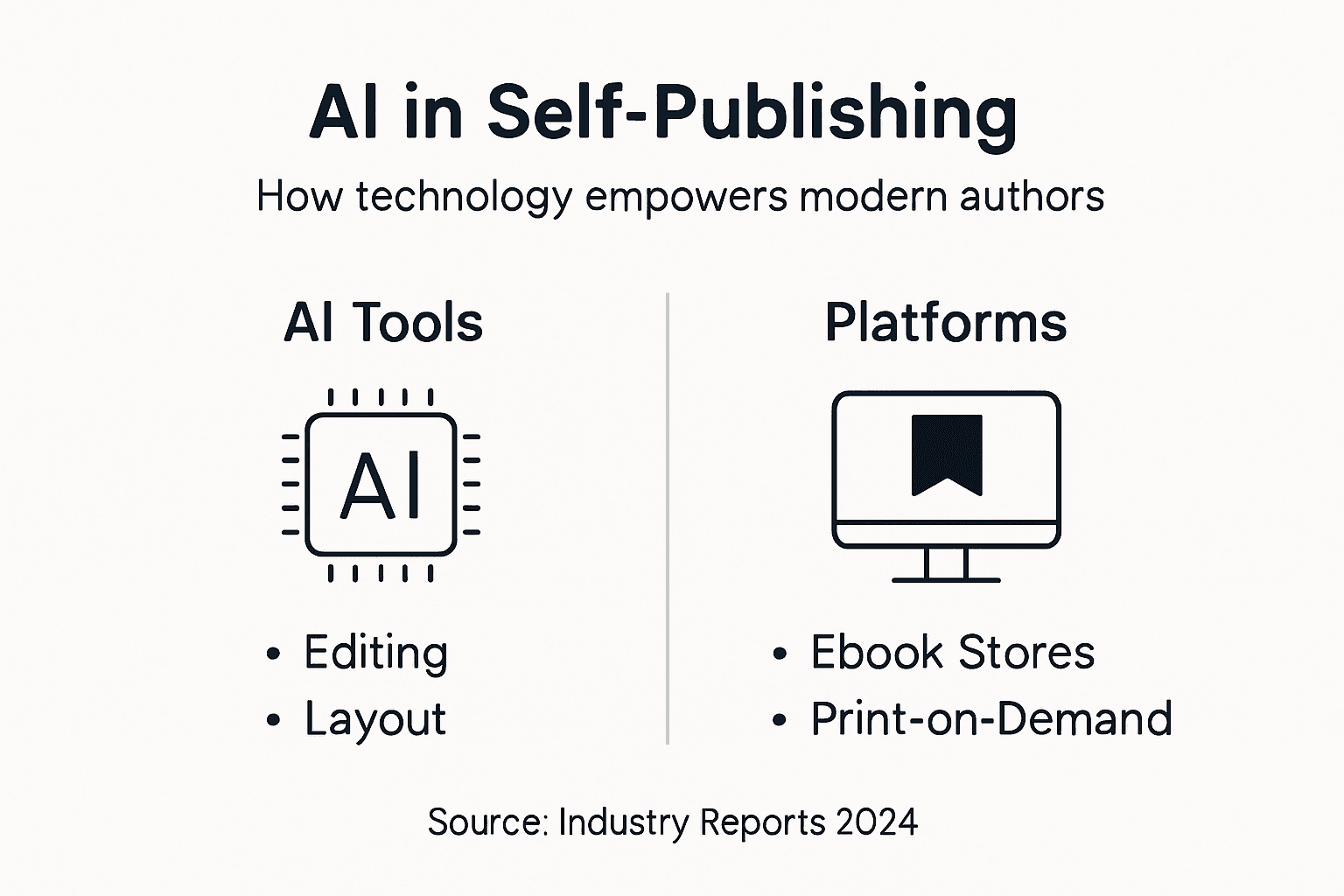
Digital self-publishing platforms have evolved into diverse models that cater to different author needs and preferences. Self-publishing models range from completely independent approaches to more structured publishing strategies, offering writers multiple paths to bring their work to market.
The primary types of digital self-publishing platforms include:
- Do-it-yourself platforms: Authors handle all aspects of publishing independently
- Assisted self-publishing services: Provide professional support and bundled publishing tools
- Hybrid publishing models: Share publication costs and rights between author and publisher
- Genre-specific platforms: Specialized spaces for specific writing categories like web fiction
Each platform type offers unique advantages and challenges. Do-it-yourself platforms provide maximum creative control but require authors to manage every production detail. Assisted services reduce technical complexity by offering professional editing, design, and distribution support.
Not all self-publishing platforms are created equal - understanding their unique features is crucial for success.
Geographical variations play a significant role in digital publishing landscapes. Some regions, like China and South Korea, have robust online literature markets with platforms specifically designed for digital storytelling. These markets often feature unique monetization models and reader engagement strategies that differ from Western publishing approaches.
Pro tip: Research multiple platform types and compare their specific features, costs, and rights management policies before committing to a single publishing approach.
How AI Enhances the Publishing Process
Artificial Intelligence is dramatically transforming the self-publishing landscape by automating and streamlining complex publishing workflows. AI technologies are revolutionizing how authors approach manuscript creation, editing, and distribution.
The key areas where AI enhances the publishing process include:
- Manuscript Assessment: Advanced algorithms evaluate writing quality
- Automated Editing: AI-powered tools provide instant grammar and style suggestions
- Cover Design Generation: Machine learning creates professional book covers
- Marketing Analysis: Predictive tools optimize book targeting and promotion
- Pricing Optimization: Data-driven recommendations for competitive pricing
AI-driven editing tools can analyze manuscripts with unprecedented precision, identifying nuanced grammatical issues, stylistic inconsistencies, and potential improvements that human editors might overlook. These systems go beyond simple spell-checking, offering contextual recommendations that help authors refine their writing.
AI doesn't replace human creativity - it amplifies an author's potential by handling technical complexities.
Targeted marketing represents another significant breakthrough. AI algorithms can analyze reader preferences, generating highly personalized book recommendations and identifying optimal marketing channels for specific genres and target audiences.

Pro tip: Experiment with multiple AI writing and editing tools to find the ones that best complement your unique writing style and creative process.
Copyright, Ownership, and Author Responsibilities
In the digital self-publishing landscape, authors gain unprecedented creative freedom alongside critical legal responsibilities. Copyright management becomes a complex yet essential aspect of independent publishing, requiring careful navigation of intellectual property rights.
Key author responsibilities in digital publishing include:
- Originality Verification: Ensuring all content is unique and properly attributed
- Permissions Management: Obtaining necessary rights for quoted or referenced materials
- Licensing Understanding: Comprehending different copyright and distribution agreements
- Plagiarism Prevention: Implementing robust checking mechanisms
- Rights Protection: Monitoring and defending against unauthorized content use
The digital publishing environment introduces nuanced challenges around intellectual property. Authors must proactively protect their work while simultaneously respecting the creative rights of other content creators. This means developing a comprehensive understanding of fair use, licensing agreements, and potential legal implications of content distribution.
Copyright is not just a legal technicality - it's the fundamental protection of an author's creative investment.
Digital rights management requires authors to stay informed about evolving legal frameworks. This includes understanding platform-specific policies, international copyright regulations, and the potential global reach of digitally published works.
Pro tip: Consult an intellectual property lawyer to develop a comprehensive copyright strategy tailored to your specific publishing goals.
Typical Costs and Mistakes to Avoid
Navigating the financial landscape of digital self-publishing requires strategic planning and realistic budgeting. Typical publishing expenses can quickly escalate, catching unprepared authors off guard and potentially derailing their publishing dreams.
Common cost categories and potential pitfalls include:
- Professional Editing: Ranging from $500-$3,000
- Cover Design: $200-$1,500 for professional services
- Formatting: $100-$500 for print and digital layouts
- Marketing: $300-$2,000 for targeted promotional campaigns
- Distribution Fees: Platform-specific charges and percentage cuts
Many first-time authors underestimate the comprehensive expenses associated with producing a professional-quality book. Initial investments can easily range from $3,000 to $5,000, with some projects requiring even more substantial financial commitments. The temptation to cut corners can lead to subpar publications that struggle to gain traction in a competitive market.
Investing in quality is not an expense - it's a strategic foundation for your publishing success.
Marketing budgets often represent the most overlooked aspect of self-publishing. Many authors allocate minimal resources to promotion, assuming their work will automatically attract readers. In reality, strategic marketing requires targeted investment and consistent effort to generate meaningful visibility.
Here's a quick reference on common self-publishing cost areas and their typical impact:
| Cost Area | Typical Range | Impact on Success |
|---|---|---|
| Editing | $500-$3,000 | Directly improves book quality |
| Cover Design | $200-$1,500 | Enhances visual appeal |
| Formatting | $100-$500 | Enables professional layouts |
| Marketing | $300-$2,000 | Drives reader discovery |
| Distribution Fees | 10%-30% per sale | Affects net earnings |
Pro tip: Create a comprehensive budget that includes a 20% contingency fund to cover unexpected expenses and opportunities during your publishing journey.
Empower Your Digital Self-Publishing Journey with AI and Librida
Many authors face the challenge of navigating complex publishing steps while striving to maintain creative control and quality. This article highlights the power of AI tools in manuscript assessment, editing, cover design, and marketing analysis—key areas where many writers seek expert support. If you want to overcome common pitfalls like managing editing costs, optimizing your story, and protecting your copyright, leveraging innovative technology is essential.
Librida is designed to transform these challenges into opportunities by providing a seamless platform that helps you shape, develop, and refine your stories with artificial intelligence. Discover how you can simplify your creative process, enhance productivity, and launch your book faster by visiting Librida. Our interactive templates and AI-driven editing support empower both beginners and experienced writers to produce professional quality work while maintaining full ownership and control.
Want to see how the latest AI innovations can transform your writing into a compelling published book today
Explore the future of self-publishing now at Librida and take the first step towards turning your ideas into reality. Start refining your manuscript with cutting-edge AI tools and join a community that supports your publishing ambitions every step of the way.
Frequently Asked Questions
What is digital self-publishing?
Digital self-publishing is a method that allows authors to publish their work independently, bypassing traditional publishing houses and retaining full creative control over their work.
How can AI enhance my self-publishing process?
AI can streamline the self-publishing process by automating manuscript assessment, providing editing suggestions, generating cover designs, analyzing marketing strategies, and optimizing pricing based on data-driven insights.
What are the typical costs associated with digital self-publishing?
Typical costs can range from $3,000 to $5,000, covering professional editing, cover design, formatting, marketing, and distribution fees. It's essential to budget realistically to ensure quality.
What are my copyright responsibilities when self-publishing?
As a self-published author, you must verify the originality of your work, manage permissions for quoted materials, comprehend licensing agreements, and ensure plagiarism prevention while protecting your rights against unauthorized use.