

Publishing your book should let you share your story exactly how you envisioned it, but traditional publishers often limit your choices at every stage. Many authors struggle to balance creative freedom, earnings, and genuine reader connections with the rigid processes of big publishing houses. If you want more control and better rewards, there is another path.
Self-publishing opens the door to more creative control, higher royalties, and the chance to connect directly with your audience. With new technology and AI tools, bringing your book to market is faster and more affordable than ever before. Get ready to discover the biggest advantages you gain when you take publishing into your own hands—benefits that could transform your journey as an author.
Table of Contents
- 1. Total Creative Control Over Your Story
- 2. Faster Time to Market With AI Assistance
- 3. Higher Royalties And Transparent Earnings
- 4. Direct Connection To Your Reader Audience
- 5. Easier Revisions And Updates With Technology
- 6. Global Reach Through Digital Distribution
Quick Summary
| Key Insight | Explanation |
|---|---|
| 1. Self-publishing gives you creative control | You make all decisions about your book, from story elements to marketing strategies, without compromising your vision. |
| 2. AI speeds up the publishing process | Using AI tools, you can reduce the time from manuscript to published book, accelerating each phase of the publishing journey. |
| 3. Higher royalties from self-publishing | You can earn 60-70% royalties per sale, significantly more than traditional publishing, enhancing your financial success. |
| 4. Establish direct connections with readers | Engage with your audience directly through email lists and social media, fostering relationships and community around your work. |
| 5. Flexibility for updates and revisions | You can revise your book anytime without publisher delays, allowing for continuous improvements based on reader feedback. |
1. Total Creative Control Over Your Story
In the world of publishing, your voice matters most. Self-publishing puts you in the director's chair, deciding everything from story elements to how your book reaches readers.
Traditional publishers offer valuable expertise and distribution networks. However, they also require compromise. Editors may request significant changes to your manuscript, marketing teams make decisions about your cover design, and publishing timelines follow their schedules, not yours.
Self-publishing eliminates these compromises. You retain complete creative authority over your manuscript, cover design, marketing strategy, and publishing timeline. This freedom appeals to authors who have a clear vision for their work and want final approval on every decision.
Here's what total creative control looks like in practice:
- Story and manuscript decisions remain entirely yours without editorial mandates
- Cover design reflects your vision, not a publisher's market assumptions
- Pricing strategy aligns with your goals and target audience
- Marketing approach matches your brand and author voice
- Publishing schedule follows your readiness, not a corporate calendar
The research shows that authors choosing self-publishing actively seek this control because they're willing to invest in professional editing, design, and marketing on their own terms. You decide which services matter most and how to allocate your resources.
Total control means you answer only to your readers, not a publishing committee.
This level of autonomy comes with responsibility. You'll need to hire professionals for editing, cover design, and formatting if you want quality results. The investment varies based on your choices, but the payoff is a book that authentically represents your vision.
Many aspiring authors underestimate how much their voice gets shaped by traditional publishing processes. With self-publishing, your unique perspective, storytelling style, and message remain unfiltered. Your readers connect with the real you on the page.
Pro tip: Document your creative vision in a brief author guidelines document before you start writing, then reference it when making design and marketing decisions to maintain consistency throughout your self-publishing journey.
2. Faster Time to Market with AI Assistance
Speed matters when you're ready to share your story with the world. AI tools compress the entire publishing timeline, letting you move from manuscript to published book in weeks instead of months or years.
Traditional publishing timelines stretch across 18-24 months minimum. Self-publishing without AI support still requires weeks of writing, editing, design iterations, and marketing prep. AI assistance cuts these processes dramatically by automating repetitive tasks and accelerating creative work.
AI-powered publishing reduces time-to-market by 30-50%, according to industry data. This speed advantage matters because market timing influences book success. If your story addresses current trends or capitalizes on seasonal interest, launching faster gives you a competitive edge.
Here's how AI accelerates each publishing phase:
- Drafting and writing generate content faster through AI writing assistance
- Editing workflows speed up with AI proofreading and structural suggestions
- Cover design produces professional results without months of designer collaboration
- Marketing copy gets created instantly through AI copywriting tools
- Metadata optimization happens algorithmically for better discoverability
AI tools streamline writing, editing, and marketing automation to help independent authors launch professional-quality books efficiently. You're not waiting on external vendors or enduring lengthy approval cycles. You control the pace.
Speed without AI looks like months of waiting; speed with AI looks like weeks of focused work.
Consider a practical scenario. Without AI, designing your cover might involve 3-4 rounds of revisions over 6 weeks. With AI design tools, you generate multiple cover options in hours. Similarly, AI writing assistants help overcome writer's block faster than traditional outlining methods alone.
The time savings compound across every task. When drafting takes half the time, editing happens faster, and marketing launches sooner, you gain momentum. Early readers boost visibility through reviews and word-of-mouth while interest is fresh.
This doesn't mean rushing quality. AI accelerates tedious phases so you can invest more time in the creative work that matters most to you. Your story gets polished faster without sacrificing the elements that make it uniquely yours.
Pro tip: Create a publishing timeline working backwards from your ideal launch date, then identify which AI tools address your slowest bottlenecks first for maximum time savings.
3. Higher Royalties and Transparent Earnings
Money matters when you're building an author career. Self-publishing delivers significantly higher royalties per book sold compared to traditional publishing routes, giving you more financial control and visibility into your earnings.
Traditional publishers typically pay authors 10-15% royalties on sales. Agents take their cut, production costs are absorbed, and the publisher keeps the majority. You receive an advance upfront, but ongoing earnings remain modest unless your book becomes a bestseller.
Self-publishing flips this model entirely. Self-published authors keep 60-70% of sales revenue by eliminating intermediaries like agents and publishing houses. That means for every book you sell, you pocket significantly more money directly.
Let's look at real numbers. Suppose your book sells for $14.99 on a major platform. Through traditional publishing, you'd earn roughly $1.50 per sale. Through self-publishing, you might earn $8-10 per sale after platform fees. That difference compounds fast across hundreds or thousands of sales.
Here's what makes self-publishing earnings more transparent:
- Direct access to sales data showing exactly how many copies sold and when
- Immediate payment tracking without waiting for publisher accounting cycles
- Pricing control letting you adjust prices strategically and see results instantly
- Detailed earnings reports breaking down sales by platform and geography
- No hidden deductions or surprise accounting adjustments
You also control your pricing strategy. If you want to run a promotional sale, discount for loyal readers, or adjust your price based on demand, you can do it immediately. Traditional publishers require approval for pricing changes, limiting your flexibility.
Higher royalties mean your book's success directly translates to your financial success.
This transparency extends beyond numbers. You understand exactly where your readers come from, which marketing efforts drive sales, and which price points perform best. This data informs smarter decisions for future books.
Yes, self-publishing requires upfront investment in editing, cover design, and marketing. But once those costs are covered, each subsequent sale generates substantial profit. Most self-published authors break even within their first 100-200 sales.
Many successful authors use self-publishing's higher royalties to fund their next book, creating a sustainable cycle. Your earnings fund your growth rather than enriching publishing companies.
Pro tip: Track your publishing costs carefully and calculate your break-even point, then monitor which marketing channels drive sales most efficiently to maximize your royalty earnings over time.
4. Direct Connection to Your Reader Audience
Your readers are your business. Self-publishing lets you build relationships directly with them, creating a community around your work instead of relying on a publisher's marketing machinery.
Traditional publishing creates distance between you and your audience. Publishers control how books reach readers through bookstore placements, promotional campaigns, and distribution channels. You rarely interact with your readers directly or understand who they are beyond sales numbers.
Self-publishing flips this dynamic. Authors can establish direct sales and personalized marketing through websites, email lists, and social media. You own the relationship with every reader, not a retailer or publisher.
This direct connection creates real advantages for your author career. You gather authentic feedback immediately, learning what resonates and what doesn't. You understand your readers' preferences, challenges, and desires because they tell you directly. This insight informs your next book and strengthens your writing.
Here's what a direct reader connection enables:
- Email marketing reaching readers instantly without platform restrictions
- Community building through exclusive forums, groups, or newsletters
- Authentic feedback gathering honest reviews and reader responses
- Personalized experiences offering bonus content or early access to loyal fans
- Direct sales selling books from your website and keeping higher profits
Imagine having a list of 1,000 engaged readers who love your work. When you launch your next book, they hear about it first through your email. Many preorder before the book even releases. This guaranteed sales foundation funds your marketing and builds momentum.
Your readers become your marketing team, amplifying your message through genuine enthusiasm.
Personalized engagement matters because readers crave authentic author connections. They want to know the person behind the story. Social media, newsletters, and direct interactions satisfy this hunger. Readers who feel personally connected become advocates who recommend your books to friends.
This community also provides encouragement during difficult writing periods. When you connect with readers celebrating your success, motivation returns. Their enthusiasm fuels your creativity.
Building this relationship takes intention and consistency. You'll spend time on social media, respond to reader emails, and participate in your community. But the payoff is sustainable author success built on genuine relationships rather than marketing algorithms.
Pro tip: Start building your reader email list before you publish by offering a free short story or exclusive chapter in exchange for email signup, then nurture these early supporters into your most loyal fans.
5. Easier Revisions and Updates with Technology
Perfection isn't required on day one. Self-publishing with modern technology lets you update your book anytime, correcting errors and improving content without waiting for publisher approval.
Traditional publishing locks your book into a fixed version. If you discover a typo after publication, request changes, or want to add new information, the publisher controls whether updates happen. This process takes months, if it happens at all.
Self-publishing operates differently. You own your files and control updates completely. Found a factual error? Update it immediately. Received reader feedback about a confusing section? Revise and republish within hours. Technology enables rapid manuscript updates without publisher delays, letting you adapt your book to reader preferences and market demands dynamically.
This flexibility creates a living, evolving book rather than a static product. You respond to feedback, incorporate new research, and refine your narrative over time. Readers benefit from continuous improvement, and your book stays relevant longer.
Here's what technology enables for revisions:
- Instant updates to digital versions across all platforms simultaneously
- AI editing tools catching errors and suggesting improvements automatically
- Version control tracking changes and maintaining backup copies
- Quick formatting fixes without redesigning the entire layout
- Content additions expanding sections based on reader requests
Consider a practical example. You publish a business book in January. By March, industry changes make some advice outdated. With self-publishing, you update those chapters immediately. Readers downloading the book in April get the improved version. Traditional publishing would require waiting for a second edition, possibly years later.
Your book improves continuously because you control the revision process completely.
This agility matters especially for non-fiction. Technology, trends, and reader feedback evolve constantly. Self-published authors stay current while traditionally published books become outdated quickly.
Even for fiction, revisions help. Reader reviews highlight confusing plot points, grammar issues, or character inconsistencies. You fix these problems and provide a better experience for future readers.
The cost savings are significant too. AI tools reduce editing expenses per revision, and you avoid publisher fees for updated editions. Multiple updates remain affordable across your entire catalog.
This continuous improvement mindset builds trust with readers. They know you care enough to refine your work based on their feedback.
Pro tip: Create a revision schedule reviewing reader feedback quarterly and implement updates in batches every 3-4 months rather than constantly, maintaining stability while continuously improving your book.
6. Global Reach Through Digital Distribution
Your book can reach readers anywhere on Earth. Self-publishing through digital distribution platforms eliminates geographic barriers, making your work available to a worldwide audience instantly.
Traditional publishing limits distribution primarily to English-speaking markets and major bookstores. International rights require separate negotiations, additional publishing deals, and months of delays. Many aspiring authors never see their work distributed beyond their home country.
Self-publishing removes these geographic constraints completely. Upload your book once to digital platforms, and readers in Australia, Canada, India, and every other country can purchase it immediately. No territorial restrictions. No middlemen negotiating rights. Your story goes global on day one.
This global accessibility matters profoundly for niche audiences. Suppose you write a specialized guide on sustainable agriculture for small farmers. Readers in Kenya, Brazil, and Indonesia search for exactly your expertise. Traditional publishing might never reach them. Self-publishing puts your book in their hands through a simple search.
Here's what digital distribution enables:
- Instant worldwide availability across major platforms like Amazon, Apple Books, and others
- Multiple language editions published independently without publisher contracts
- No geographic restrictions limiting who can purchase your work
- Currency flexibility readers pay in their local money automatically
- 24/7 availability your book sells while you sleep across time zones
Consider the math. A traditionally published book reaches perhaps 50,000 readers in your home country over five years. A self-published digital book reaches 5,000 readers globally in the first month, with no upper limit. Your audience expands exponentially through digital distribution.
Digital distribution means your book competes on the global stage without expensive logistics or publishing gatekeepers.
This reach translates directly to income. Readers from wealthy countries purchasing your book generate higher revenue per sale. A reader in Germany or Singapore pays more than a reader in a developing nation, and all sales contribute to your royalties.
Language barriers matter less than you'd think. Readers use translation tools to access books in foreign languages. Many bilingual readers actively seek books in both languages. Your English-language book finds audiences worldwide without translation requirements.
The cost savings are remarkable too. Printing and shipping physical books globally costs thousands. Digital distribution costs almost nothing, making global reach completely accessible to independent authors.
Pro tip: Research which platforms dominate in specific countries where your target audience lives, then optimize your book's metadata and descriptions for international search visibility in those regions.
Below is a comprehensive table summarizing the main points discussed throughout the article regarding the benefits and considerations of self-publishing for authors.
| Aspect | Description | Benefits |
|---|---|---|
| Total Creative Control | Authors retain full authority over content, design, and marketing. | Ensures authenticity and aligns all decisions with author vision. |
| Faster Time to Market | Self-publishing leverages AI tools to streamline processes. | Reduces duration for writing, editing, design, and publishing phases. |
| Higher Royalties | Royalties range from 60-70%, avoiding traditional publishing intermediaries. | Substantial financial gain for each book sold. |
| Direct Reader Connection | Authors directly engage with their audience through personal channels. | Strengthened relationships and immediate feedback. |
| Easier Revisions | Technology allows for swift updates and improvements to published work. | Maintains relevance and incorporates feedback dynamically. |
| Global Distribution | Digital platforms offer worldwide availability immediately upon release. | Expands reach and audience without geographic limitations. |
Empower Your Self-Publishing Journey with Librida
If you are seeking total creative control, faster time to market, and higher royalties like the article "6 Key Self-Publishing Advantages for Aspiring Authors" highlights, Librida is your perfect companion. Many authors struggle with balancing the creative vision and the complex, lengthy publishing process. Librida solves this by leveraging AI technology to simplify writing, editing, and designing your manuscript effortlessly.
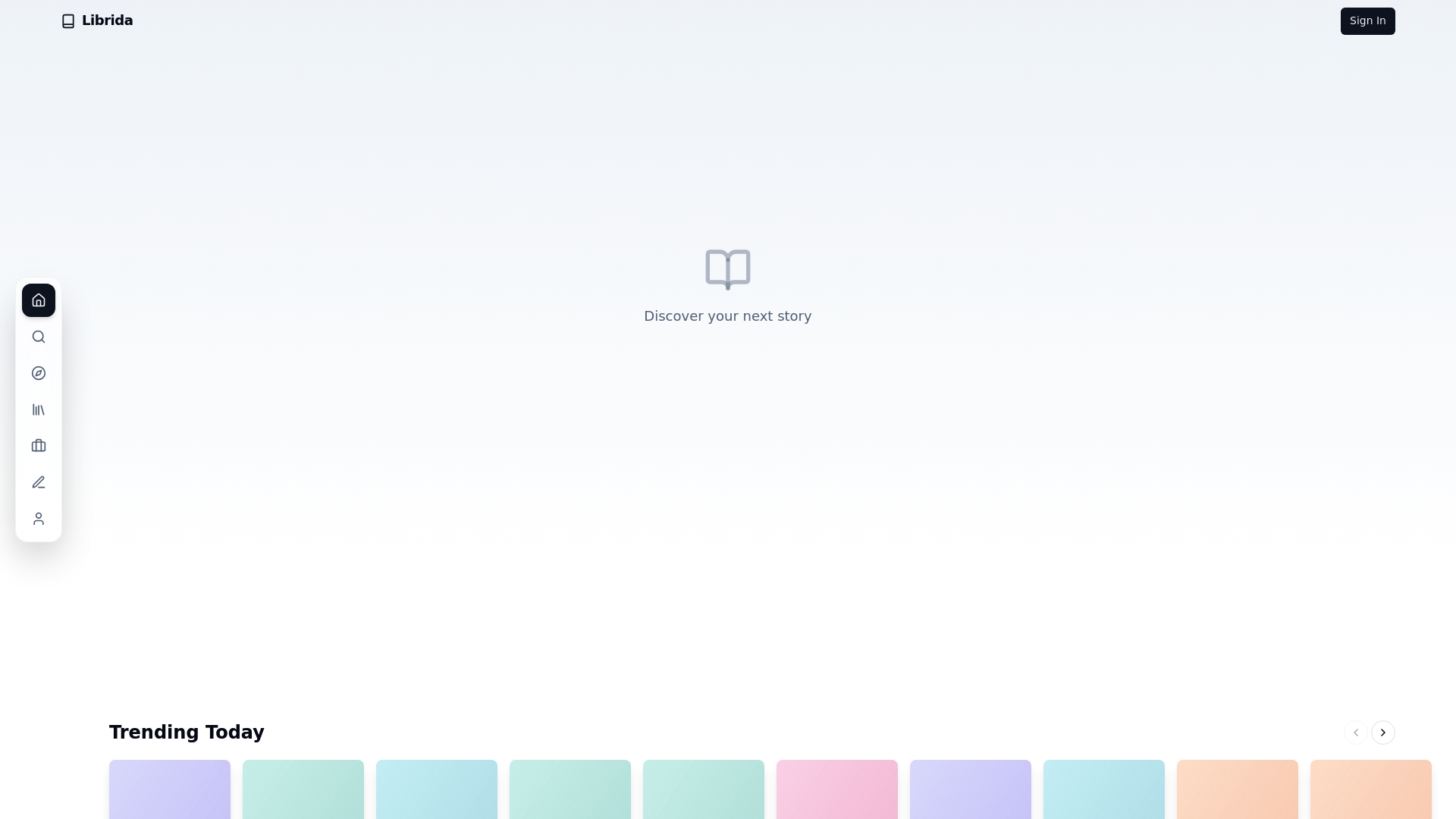
Start transforming your ideas into fully polished books today with Librida's innovative platform. Experience how our AI-driven tools give you the power to streamline content creation, optimize your publishing timeline, and maintain control over your story from start to finish. Don’t wait months or compromise your vision. Visit Librida and discover the ease of self-publishing on your own terms now.
Frequently Asked Questions
What creative control do I have with self-publishing?
With self-publishing, you have complete creative control over your manuscript, cover design, pricing, and marketing strategies. Take charge of your vision by making decisions that align with your story and brand.
How does self-publishing speed up the book release process?
Self-publishing can reduce your time to market by 30-50%. Utilize AI-assisted tools to automate repetitive tasks and streamline writing, editing, and marketing to launch your book within weeks instead of months.
How much can I earn through self-publishing?
Self-published authors typically keep 60-70% of sales revenue, which is significantly higher than the 10-15% offered by traditional publishers. Track your sales and monitor your financial performance to maximize your earnings for each book sold.
How can I connect directly with my readers?
Self-publishing allows you to build direct relationships with your readers through email lists, social media, and personalized marketing. Engage with your audience to gather feedback and enhance your community around your work.
How easy is it to revise my self-published book?
Revising a self-published book is straightforward; you can update your content at any time. Commit to a schedule for reviewing feedback and implement revisions quarterly to ensure your book remains current and relevant.
How do I reach a global audience with self-publishing?
Self-publishing provides instant worldwide availability through digital platforms without geographic barriers. Publish your book digitally to ensure that readers from around the world can access your work immediately.
Recommended
- Notes from a Slightly Unstable Life by Mikael Löwgren | Librida
- Librida — Enter the Story Universe
- Silicon & Solitude: An Architect's AI Ascent by Mikael Löwgren | Librida
- The Orchard of Epiphanies by Mikael Löwgren | Librida
- 7 Advantages of Unique Business Cards (Beyond Standing Out) – BcardsCreation