

The publishing landscape has transformed radically. 78% of successful self-published authors now leverage AI tools to slash book production time from six months to just six weeks. Yet many aspiring authors feel paralyzed by the sheer number of AI platforms and self-publishing steps. This checklist cuts through the noise, giving you a streamlined, AI-focused roadmap to launch your book faster and with higher quality than ever before.
Table of Contents
- Selection Criteria For AI Tools In Self-Publishing
- Top AI Tools For Writing And Drafting
- AI Editing And Polishing Tools
- Design And Cover Creation With AI
- Marketing Automation AI Tools
- Publishing Platforms And Distribution
- Summary Comparison And Situational Recommendations
- Explore Librida's AI-Powered Publishing Solutions
- Frequently Asked Questions
Key takeaways
| Point | Details |
|---|---|
| AI tool selection criteria | Evaluate usability, pricing, feature sets, platform integration, and support to choose the best tools for each publishing stage. |
| Top AI writing and editing tools | Sudowrite, NovelCrafter, and FictionAI accelerate drafting while Grammarly, Hemingway App, and ProWritingAid polish manuscripts. |
| Design and marketing automation | AI-powered cover design and marketing kits reduce time to market and improve discoverability with minimal manual effort. |
| Publishing platform options | Amazon KDP, Gumroad, Kobo, and Etsy offer varied revenue models optimized by AI metadata and sales tracking. |
| Situational recommendations | Fiction writers, planners, budget-conscious authors, and marketers each benefit from different tool combinations based on goals. |
Selection criteria for AI tools in self-publishing
Before you dive into specific platforms, you need a framework to evaluate AI tools objectively. Choosing the wrong tool wastes time and money, while the right one accelerates your entire workflow.
Start with usability. Usability and learning curve are top priorities for new authors needing quick productivity gains. If a tool requires weeks of tutorials before you can draft a single chapter, it defeats the purpose. Look for intuitive interfaces and clear onboarding processes. Test free trials to gauge how quickly you can become productive.
Pricing deserves careful scrutiny. Monthly subscriptions add up fast when you stack writing, editing, and marketing tools. Some platforms offer annual discounts or BYOK (Bring Your Own Key) models where you pay only for API usage. Calculate your total monthly cost across all tools and compare it to your publishing budget.
Feature sets must match your publishing stage. A fiction writer needs plot development and character tracking, while a nonfiction author prioritizes research organization and citation management. Avoid paying for features you will never use. Check whether the tool integrates with your publishing platform to minimize manual data entry. Integrating AI tools seamlessly into your workflow eliminates friction and keeps momentum high.
Finally, verify support and community resources. When you hit a technical snag at midnight before your launch deadline, responsive customer service or an active user forum can save your timeline. Read reviews on independent sites to understand real-world support quality.
Pro Tip: Create a simple spreadsheet listing your must-have features, budget ceiling, and integration requirements before browsing tools. This prevents impulse purchases and keeps you focused on what truly matters for your project.
Top AI tools for writing and drafting
Writing forms the foundation of your book, and AI tools here vary dramatically in focus and pricing. Choosing wisely based on your genre and workflow style saves hundreds of hours.
Sudowrite offers fiction-specific Story Engine and voice matching, priced $19-$69/month. It excels at generating plot twists, character arcs, and stylistic consistency. Fiction writers who struggle with pacing or need help brainstorming scenes find Sudowrite invaluable. The interface feels conversational, allowing you to describe what you want and receive drafts that match your voice after initial training.
NovelCrafter consolidates outlines, drafts and world-building for $9-$25/month, great for complex novels. If you write epic fantasy, science fiction, or multi-POV thrillers, NovelCrafter keeps timelines, character relationships, and subplots organized in one workspace. The outlining tools help you map story beats before drafting, reducing rewrites later.
FictionAI stands out with its BYOK pricing model. You connect your own OpenAI or Anthropic API key and pay only for tokens used, often cutting monthly costs in half compared to subscription tools. Budget-conscious authors who write regularly benefit most, though setup requires slight technical knowledge.
Google Docs remains a free, collaborative powerhouse. While it lacks AI-specific story features, the Smart Compose and grammar suggestions handle basic drafting needs. Real-time collaboration lets beta readers or co-authors comment inline without email chains. For nonfiction or straightforward projects, Google Docs paired with a dedicated editing tool covers most bases without subscription fees.
Pro Tip: Start with one tool and master it before adding others. Jumping between platforms fragments your creative process and slows progress. Pick the AI writing and drafting tool that aligns with your genre, then commit to it for at least one complete manuscript. Many fiction writing AI tools offer free trials, so test before you invest.
AI editing and polishing tools
A polished manuscript separates amateur work from professional. AI editing tools catch errors and style issues human eyes miss, especially after you have read the same text dozens of times.
Grammarly targets grammar, punctuation, and style consistency across your manuscript. The free tier handles basic errors, while the premium version ($12/month) offers tone adjustments and plagiarism detection. Grammarly integrates directly into Google Docs, Microsoft Word, and most web browsers, making it easy to edit wherever you write. Nonfiction authors particularly value the clarity and conciseness suggestions that tighten verbose explanations.
Hemingway App improves readability by highlighting complex sentences, passive voice, and adverb overuse. The online version is free, or pay $19.99 once for the desktop app. Hemingway assigns a grade level to your text, helping you ensure accessibility for your target audience. Paste in a chapter, review the highlighted areas, and simplify without losing meaning.
ProWritingAid provides over 20 detailed manuscript reports for style and pacing improvements at $120/year. These reports analyze sentence variety, dialogue tags, cliches, and pacing, giving you a comprehensive view of manuscript strengths and weaknesses. Fiction writers use the pacing report to identify slow chapters, while nonfiction authors rely on the readability and structure reports. ProWritingAid integrates with Scrivener, Word, and Google Docs, allowing in-app editing.
Pro Tip: Run your manuscript through Hemingway App first to catch readability issues, then use Grammarly or ProWritingAid for deeper grammar and style checks. Layering tools this way maximizes polish without redundant effort. Explore more about AI editing tools to refine your workflow.
Design and cover creation with AI
Your book cover is the single most important marketing asset. Readers judge books by covers, and a professional design dramatically boosts sales and click-through rates on retail sites.

Midjourney generates high-fidelity cover art from text prompts. Describe your vision (genre, mood, color palette, key imagery), and Midjourney produces multiple iterations. You refine prompts until the output matches your concept, then download high-resolution files. Subscription starts at $10/month for limited image generation, scaling up for commercial use rights. Midjourney requires some prompt engineering skill, but online communities share effective formulas.
Some AI cover design features are built into comprehensive writing platforms, simplifying the workflow. For example, certain tools bundle manuscript drafting with template-based cover creation, allowing you to finish both writing and design in one environment. This integration saves time and reduces the learning curve for authors uncomfortable with standalone design software.
Professional cover design strongly impacts discoverability and conversion. A cover that signals genre conventions (think dark, moody tones for thrillers or bright, whimsical fonts for romance) attracts the right readers. If AI-generated art does not quite hit the mark, consider hiring a designer on Fiverr or 99designs for final polish. Many designers now accept AI drafts as starting points, reducing costs while ensuring professional quality.
Pro Tip: Study bestseller covers in your genre before creating prompts. Note typography, color schemes, and imagery patterns. Mimic these conventions in your AI prompts to ensure your cover fits reader expectations and stands out in search results.
Marketing automation AI tools
Marketing drains time and energy, especially for self-published authors juggling writing and promotion. AI marketing tools automate content creation and campaign management, freeing you to focus on your next book.
ManuscriptReport.com generates marketing kits rapidly for $40-$149, including blurbs, social media posts, email templates, and ad copy tailored to your manuscript. Upload your book file, answer a few questions about target audience and themes, and receive a complete promotional package within hours. This service suits authors launching quickly or uncomfortable writing marketing copy themselves.
Jasper and Copy AI create promotional copy and social content on demand. Input your book description and target keywords, and these platforms generate Facebook ads, Instagram captions, email subject lines, and blog post outlines. Monthly subscriptions range from $29 to $99 depending on word limits. Both tools learn your brand voice over time, producing more consistent copy as you use them.
AI marketing tools greatly reduce time and cost of book promotion. Instead of spending days crafting social posts and ad variations, you generate dozens of options in minutes, test the best performers, and refine based on data. This iterative approach mirrors professional marketing strategies without requiring a large budget or agency.
Pro Tip: Use AI-generated marketing copy as a first draft, not a final product. Edit to inject your unique voice and ensure accuracy. AI marketing automation works best when paired with human creativity and strategic thinking.
Publishing platforms and distribution
Choosing where to publish determines your revenue, reach, and control over pricing and rights. AI tools optimize this stage by streamlining metadata management and sales tracking.
Amazon KDP offers competitive royalties (up to 70% on ebooks priced $2.99-$9.99) and unmatched reach to millions of readers worldwide. KDP handles print-on-demand for paperbacks and distribution to Kindle devices and apps. The platform is free to use, taking a percentage of each sale. Many authors start here due to ease of setup and built-in audience.
Platforms like Gumroad, Etsy, and Kobo provide alternatives. Gumroad suits authors selling directly to fans, offering flexible pricing including pay-what-you-want models and higher profit margins. Etsy works for niche or illustrated books targeting craft-oriented buyers. Kobo reaches international markets, particularly Canada and Europe, where Amazon has less dominance. Each platform has unique fee structures and audience demographics.
AI tools optimize metadata and track sales for better revenue management. Proper keywords, categories, and descriptions boost discoverability on retail sites. Some AI platforms analyze competitor listings and suggest high-performing keywords for your genre. Sales dashboards aggregate data across platforms, helping you identify trends and adjust marketing spend efficiently. AI publishing integration simplifies these backend tasks, letting you focus on writing.
Pro Tip: Publish wide (multiple platforms) rather than exclusive to one retailer unless you use KDP Select for promotional benefits. Diversifying distribution reduces risk if one platform changes terms or algorithms.
Summary comparison and situational recommendations
With so many tools available, a direct comparison helps you choose based on cost, features, and use case. The table below summarizes top AI tools covered earlier.
| Tool | Monthly Cost | Key Features | Best For |
|---|---|---|---|
| Sudowrite | $19-$69 | Fiction Story Engine, voice matching, plot development | Fiction authors needing creative brainstorming |
| NovelCrafter | $9-$25 | Outlining, world-building, multi-POV management | Complex novels with intricate plots |
| FictionAI | BYOK (variable) | Token-based pricing, customizable AI models | Budget-conscious authors with technical skills |
| ProWritingAid | $10/month or $120/year | 20+ manuscript reports, style and pacing analysis | Authors seeking comprehensive editing feedback |
| ManuscriptReport.com | $40-$149 one-time | Marketing kits, blurbs, ad copy generation | Authors launching quickly without marketing experience |
Fiction writers benefit most from Sudowrite or NovelCrafter depending on whether they prioritize creative assistance or organizational structure. Planners who outline extensively before drafting should choose NovelCrafter for its robust world-building tools. Budget-conscious authors writing regularly can reduce costs by 50% or more with FictionAI's BYOK model, though setup takes extra effort.
Marketers and authors focused on promotion gain immediate value from ManuscriptReport.com, which delivers ready-to-use assets without requiring copywriting skills. Authors who prefer hands-on control over marketing messages should use Jasper or Copy AI to generate multiple variations and test performance. Tradeoffs in cost versus features are clear: higher-priced tools offer more automation and deeper insights, while budget options require more manual input but remain effective.
Pro Tip: Start with one tool per publishing stage (writing, editing, marketing) rather than overloading your workflow. Master each before adding another. Many authors find success pairing a free or low-cost writing tool like Google Docs with a premium editing tool like ProWritingAid, balancing budget and quality. Explore a detailed AI tool comparison to refine your choices.
Explore Librida's AI-powered publishing solutions
Now that you have a comprehensive checklist and tool recommendations, consider how Librida integrates these AI capabilities into one streamlined platform. Librida consolidates writing, editing, design, and marketing stages, eliminating the need to juggle multiple subscriptions and logins.
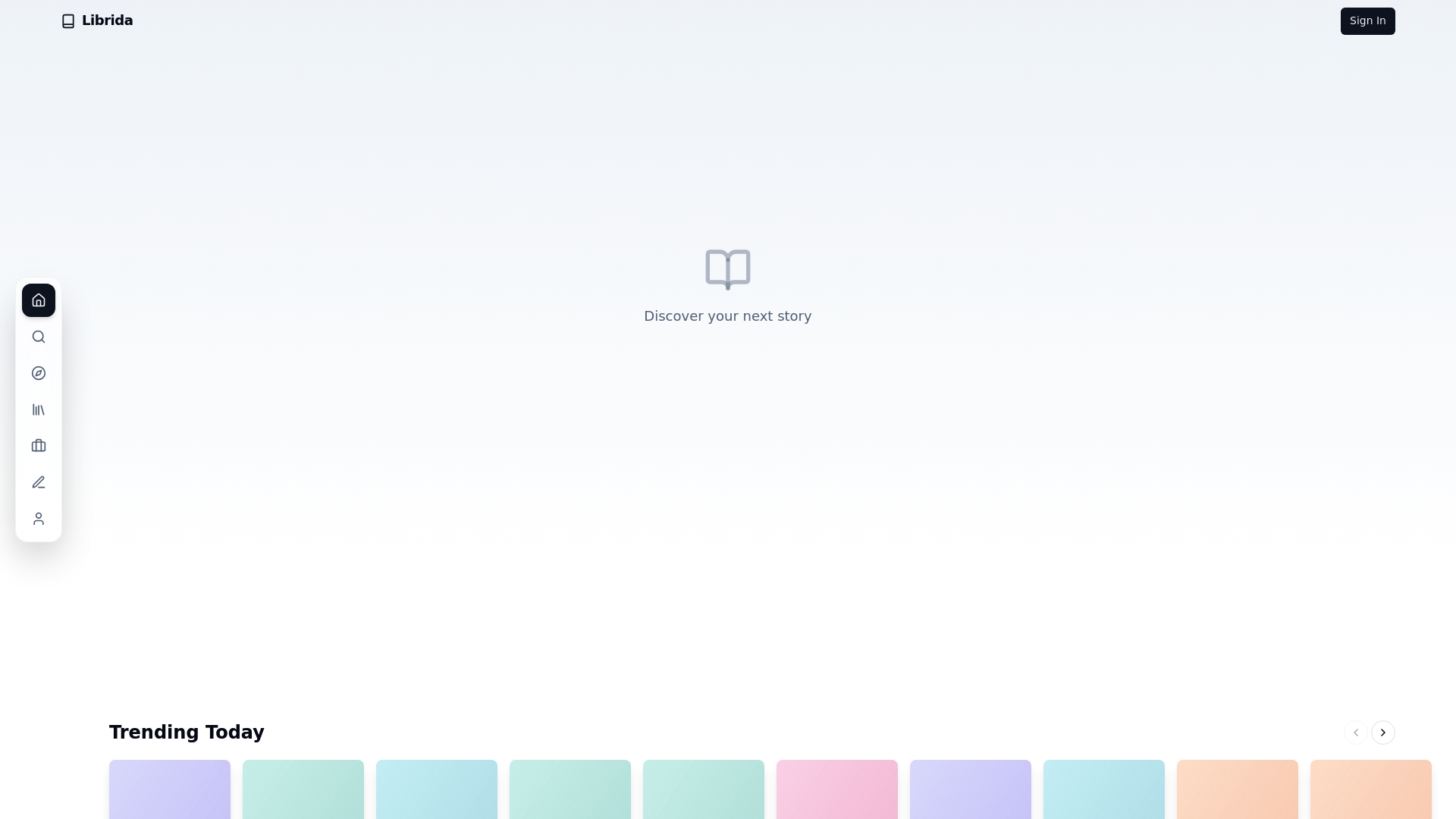
Librida offers cutting-edge features including AI-generated audiobooks and AI video book trailers, expanding your reach beyond text. Imagine launching your book with a professional narration and promotional video, all created within the same platform. This comprehensive approach supports authors through every stage, from initial draft to final marketing campaign. Leverage AI to launch faster and with higher quality. Learn more about AI publishing and discover how Librida empowers authors worldwide.
Frequently asked questions
What is a self-publishing checklist with AI?
An AI-enhanced self-publishing checklist is a structured roadmap that guides authors through writing, editing, designing, marketing, and publishing a book using artificial intelligence tools at each stage. Unlike traditional checklists, this approach incorporates AI platforms that automate time-consuming tasks like drafting scenes, polishing grammar, generating cover art, and creating promotional copy. The result is a faster, more efficient publishing process without sacrificing quality.
AI does not replace your creativity or unique voice. Instead, it handles repetitive tasks and provides suggestions, letting you focus on storytelling and strategic decisions. Authors maintain full control over content while benefiting from technology that accelerates production timelines and improves manuscript quality. This checklist helps you identify which tools to use at each stage and how to integrate them seamlessly into your workflow.
How do I choose the best AI tools for my book project?
Match tools to your publishing stage, genre, and budget. Start by listing must-have features (plot development for fiction, citation management for nonfiction) and your monthly budget ceiling. Test free trials to evaluate usability and integration with your existing workflow. Read independent reviews to understand real-world support quality and avoid platforms with poor customer service.
Consider whether you prefer all-in-one platforms or specialized tools. All-in-one solutions simplify setup but may lack depth in specific areas. Specialized tools offer advanced features but require managing multiple subscriptions. Most authors find success with a hybrid approach: one primary writing tool, one editing tool, and one marketing automation platform.
Can AI tools reduce my self-publishing timeline?
AI tools can reduce book production time from months to weeks by automating drafting, editing, cover design, and marketing tasks. What once took six months of solo effort now compresses into six weeks with AI assistance. Authors generate first drafts faster, receive instant editing feedback, and create professional marketing assets without hiring expensive freelancers.
However, speed depends on how effectively you use these tools. Learning curves and integration challenges can slow initial progress. Invest time upfront to master one tool per stage, then scale as you become comfortable. The timeline reduction is real, but rushing without understanding the tools produces lower-quality results.
Are there risks to relying on AI for self-publishing?
Avoid depending solely on AI for creativity. Always edit AI-generated content personally to ensure accuracy, inject your unique voice, and verify factual claims. AI can produce plausible-sounding but incorrect information, so human oversight remains essential. Watch subscription costs carefully, as stacking multiple tools can exceed $200/month. Understand each platform's pricing model to avoid surprise charges.
Use AI as a productivity enhancer, not a replacement for your creative judgment. The best results come from collaboration between human intuition and AI efficiency. Set boundaries on AI use to maintain authenticity and avoid homogenized content that blends into the noise. Balance automation with personal touch to produce books that resonate with readers and reflect your distinct perspective.