

Staring at a blank screen can test even the most determined writer’s patience, especially when deadlines loom and creativity feels distant. For aspiring authors in 2026, the rise of AI-powered writing tools promises a smoother path from first draft to finished book. These smart companions are changing the self-publishing journey by helping writers overcome blocks, shape ideas, and polish every word while keeping your unique voice intact. Discover how to harness these tools for a more confident, efficient manuscript process.
Table of Contents
- Step 1: Prepare Your Manuscript With AI Tools
- Step 2: Format Your Book For Digital And Print
- Step 3: Design A Compelling Cover And Layout
- Step 4: Publish And Distribute On Top Platforms
- Step 5: Review And Promote Your Published Book
Quick Summary
| Key Insight | Explanation |
|---|---|
| 1. Use AI to overcome writer's block | AI can generate multiple options for beginnings and ideas, helping you push through creative barriers. |
| 2. Understand formatting differences | Digital and print formats have distinct requirements; know these to ensure your book looks professional in each medium. |
| 3. Design a genre-appropriate cover | A compelling cover attracts readers; research your genre's aesthetics to create a fitting design. |
| 4. Employ a multi-platform publishing strategy | Releasing your book on various platforms increases discoverability and potential sales. |
| 5. Actively promote your book post-publication | Engage with readers through reviews, emails, and social media to maintain momentum and drive sales. |
Step 1: Prepare your manuscript with AI tools
AI tools can transform how you draft, edit, and refine your manuscript. Think of them as a writing partner that helps you overcome blocks, sharpen your prose, and handle repetitive tasks while you maintain creative control.
Start by choosing the right tools for your workflow. You might use AI for brainstorming when you're stuck on plot direction, outlining to structure your chapters logically, or drafting to generate initial content you'll refine. The key is understanding what each tool does best.
Here's how to integrate AI effectively into your preparation:
- Use AI to overcome writer's block by generating multiple opening paragraphs and selecting the strongest one
- Leverage AI for argument structuring to organize complex ideas or backstory elements
- Apply AI to refine prose by rewriting awkward sentences while preserving your voice
- Let AI handle citation formatting to save time on technical details
AI accelerates your process, but human judgment remains essential. Always verify accuracy and preserve the originality that makes your book uniquely yours.
When using AI for editing, review the output carefully. AI might suggest word changes that don't match your narrator's voice or tone. Accept suggestions that improve clarity, reject those that dilute your style. This is your manuscript—AI assists, but you decide.
Address accuracy concerns head-on. AI can hallucinate facts, misremember plot details, or suggest historically inaccurate information. Cross-check any factual claims, especially in historical fiction, memoirs, or narrative nonfiction. Responsible AI use in manuscript preparation means verifying everything before it reaches readers.
Protect your intellectual property by reviewing AI tool terms. Some platforms claim ownership of content you generate. Read the fine print and choose tools that guarantee your work remains yours. Your book's rights matter from day one.
Pro tip: Create a master document where you paste AI-generated versions alongside your original prose. Comparing them side by side helps you spot exactly where AI's language differs from your voice, making it easier to accept or reject changes strategically.
Step 2: Format your book for digital and print
Formatting transforms your manuscript into a professional, reader-ready book. Different formats require different approaches—ebooks need flexible layouts while print books demand precise specifications.

Start by understanding the core differences. Digital books (epub, mobi, PDF) prioritize readability on various screen sizes. Print books require exact dimensions, margins, and bleed areas to prevent cut-off text or images during production.
Here's what you need to format for each medium:
- Digital ebooks require responsive design that adapts to phone, tablet, and e-reader screens
- Print books need fixed dimensions (typically 6x9 inches or 5x8 inches), 0.25-inch margins on all sides, and 0.125-inch bleeds for color elements
- Cover design must meet platform specifications (Amazon KDP, IngramSpark, Draft2Digital each have different requirements)
- Typography should use standard fonts (Times New Roman, Calibri, Garamond) for print and web-safe fonts for digital
Your formatting choices directly impact how readers experience your story. Sloppy formatting feels unprofessional and distracts from your narrative.
Choose your publishing platform before formatting. Amazon KDP has different specifications than IngramSpark or Draft2Digital. Each platform provides formatting templates and guidelines. Download these first—they'll save you hours of guesswork.
Handle images and graphics carefully. For print, use 300 DPI resolution minimum. For digital, 72-96 DPI works fine. Color images in print add production costs, so verify pricing before committing to full-color interior pages.
Test your formatting across devices. Download your ebook preview on a phone, tablet, and dedicated e-reader. Read through a few chapters to catch awkward page breaks, misaligned images, or formatting errors that didn't show up on your computer screen.
To clarify formatting standards, here’s a quick reference on book format requirements for digital vs. print:
| Requirement | Digital Books | Print Books |
|---|---|---|
| File Format | EPUB, MOBI, PDF | PDF (print-ready) |
| Resolution | 72-96 DPI (images) | 300 DPI (images minimum) |
| Margins/Bleed | Flexible, auto-adapt | Fixed, 0.25" margin, 0.125" bleed |
| Fonts | Web-safe fonts | Standard print fonts |
Pro tip: Use a template from your chosen publishing platform rather than formatting from scratch. Most platforms provide free Word or InDesign templates that already meet their exact specifications, reducing rejection errors and revision rounds.
Step 3: Design a compelling cover and layout
Your book cover is the first impression readers get. It communicates genre, tone, and quality in seconds. A strong cover increases click-through rates, attracts the right audience, and signals professional publishing standards.
Start by researching covers in your genre. Spend time on Amazon or your target retailer looking at bestselling titles. Notice color palettes, typography styles, and imagery trends. Romance covers differ visually from thrillers, which differ from memoirs. Genre expectations matter.
Decide between hiring a designer or using design tools. Professional designers cost $500-2,500 but deliver custom, polished results. If you're budget-conscious, AI-powered cover design tools can generate market-ready covers in minutes. These tools combine creative automation with design principles specifically tailored to publishing standards.
Follow these design fundamentals:
- Readability at thumbnail size is critical. Your cover appears as a small square on phones and tablets, so large text and high contrast matter
- Genre-appropriate imagery signals what readers will find inside. A sci-fi cover should look different from a historical novel
- Professional typography elevates perceived quality. Avoid more than two fonts, and ensure titles remain legible
- Color psychology influences purchasing decisions. Blue suggests trust, red suggests intensity, pastels suggest romance
A great cover stops the scroll. Readers judge books by their covers because covers communicate instantly what words cannot.
Layout extends beyond the cover to your interior design. Consistent fonts, proper spacing, and clean chapter openings create a professional reading experience. Your opening pages set tone before readers encounter your first sentence.
Test your cover with real people. Show it to friends, fellow writers, and target readers. Ask specifically if the genre is obvious and if they'd click to read the description. Honest feedback catches design misses your eyes might overlook.
Pro tip: Create three cover variations using your chosen design tool, then run low-cost social media ads testing which version gets the highest click-through rate. Real user data beats opinion every time.
Step 4: Publish and distribute on top platforms
Publishing your book across multiple platforms maximizes your reach and revenue potential. Different platforms serve different markets, so a multi-platform strategy ensures your book finds readers wherever they shop.
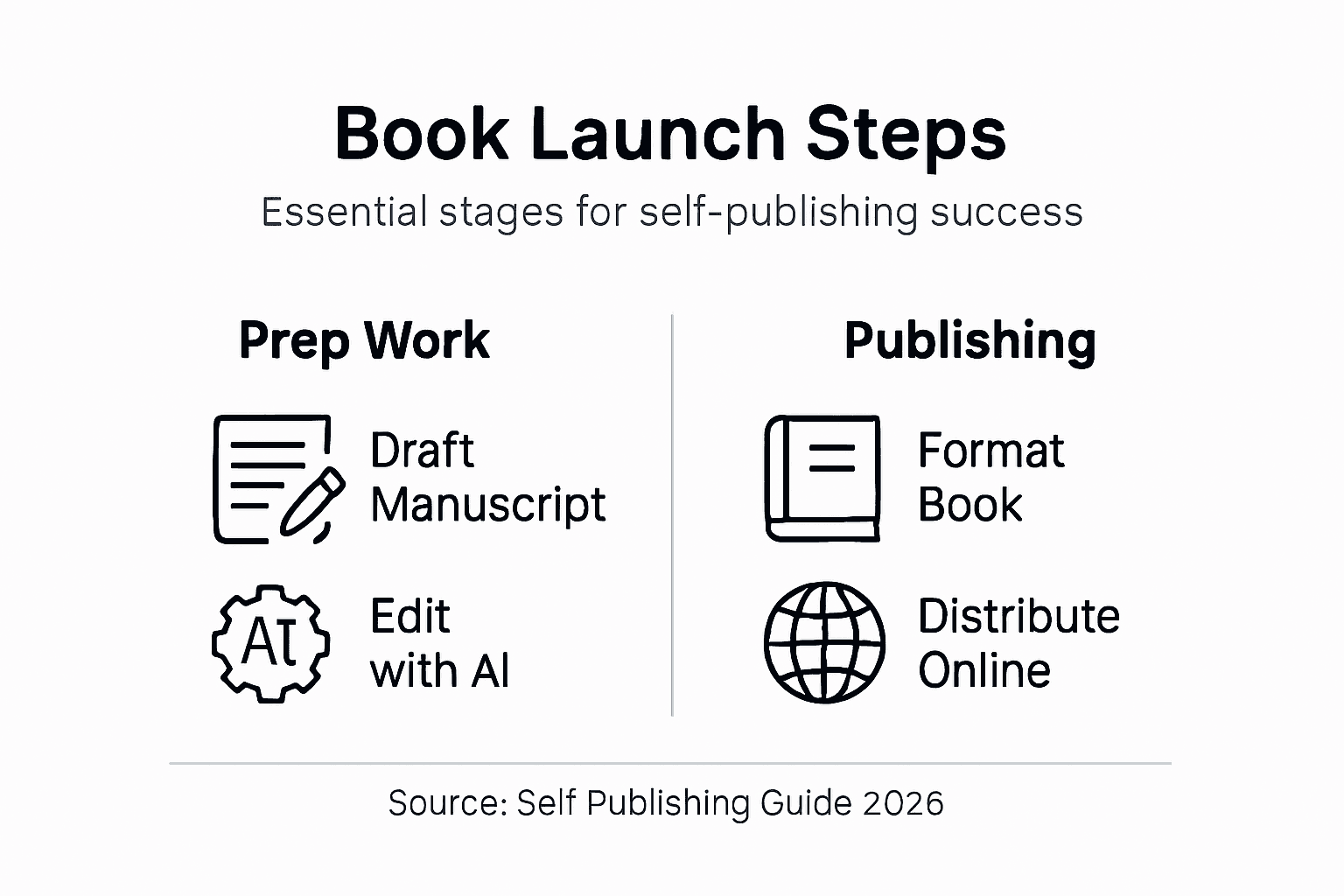
Understand the major players. Amazon KDP dominates digital sales with 60-80% market share. IngramSpark offers global print distribution to bookstores and libraries. Draft2Digital, Barnes & Noble Press, and Apple Books expand your reach to dedicated readers on those ecosystems.
Here's a concise comparison of top self-publishing platforms to help you choose based on your publishing goals:
| Platform | Digital/Print Focus | Strengths | Typical Royalty Rate |
|---|---|---|---|
| Amazon KDP | Digital & Print | Largest audience, fast payout | 35-70% |
| IngramSpark | Print & eBook | Bookstore/library access | Variable, up to 65% |
| Draft2Digital | Digital (wide) | Easy distribution, no fees | 60% minus retailer fee |
| Apple Books | Digital | Dedicated Apple device readers | Up to 70% |
| Barnes & Noble | Digital & Print | Strong US retail presence | 60-65% |
Evaluate platforms based on your priorities. Consider distribution reach, royalty rates, marketing tools, and format support. Comparing self-publishing platforms helps you align choices with your goals, whether maximizing income, reaching bookstores, or building international presence.
Here's a practical publishing sequence:
- Upload to Amazon KDP first for fastest launch and immediate sales potential
- Add print distribution through IngramSpark within two weeks for bookstore availability
- Expand to secondary platforms like Draft2Digital and Apple Books for additional revenue streams
- Optimize metadata on each platform with targeted keywords and compelling descriptions
Publishing on one platform limits your potential. Authors who distribute across three to five platforms typically see 40-60% higher total sales than single-platform authors.
Learn each platform's specific requirements. Amazon has strict formatting rules. IngramSpark requires print-ready PDFs. Apple Books prefers epub format. Taking time to understand these nuances prevents rejections and delays.
Manage your ISBN strategy carefully. Amazon provides free ISBNs but ties them to their system. Purchasing your own ISBN from Bowker gives you platform independence and professional credibility. One ISBN per edition, so plan accordingly.
Track sales and royalties across platforms. Create a simple spreadsheet showing earnings by title and platform. This data guides future publishing decisions and helps you identify which platforms work best for your genre and audience.
Pro tip: Launch simultaneously on Amazon and IngramSpark using the same publication date. Coordinated launches amplify visibility through retailer algorithms and create momentum that drives sales across all platforms.
Step 5: Review and promote your published book
Promotion determines whether your book reaches readers or languishes in obscurity. A published book without promotion is like a store with no customers. You must actively market your work across multiple channels to build momentum.
Start with review acquisition. Early reviews build credibility and influence Amazon's algorithm. Reach out to advance reader groups, book bloggers, and reviewers in your genre. Offer free or discounted copies in exchange for honest reviews. Aim for at least ten reviews in your first two weeks.
Optimize your Amazon presence strategically. Mastering Amazon's ecosystem with metadata optimization and KDP Select strategies drives discoverability. Use targeted keywords in your title and description. Select appropriate categories and keywords that match reader search behavior. Test different book descriptions to see which generates more clicks.
Build direct reader relationships beyond platform algorithms:
- Create an email list and offer a free chapter or related short story as incentive
- Engage in author communities on Reddit, Facebook, and Goodreads where readers congregate
- Collaborate with other authors through newsletter swaps and bundled promotions
- Leverage social media with authentic posts about your writing journey and book themes
Readers trust recommendations from people they follow. Building genuine community around your work creates sustained sales momentum.
Consider paid advertising selectively. Amazon Ads and BookBaby offer targeted promotion to readers actively searching for books like yours. Start small—$5-10 daily—and track return on investment carefully. Not every book justifies paid advertising, but it can accelerate initial sales momentum.
Measure what works. Track which promotional channels drive sales and which waste time. Double down on effective strategies and abandon tactics that don't convert readers into buyers.
Pro tip: Launch a free promotional period during your first month using KDP Select exclusivity. Run ads during this free period to maximize downloads, then capitalize on rankings improvements when paid sales resume.
Empower Your Book Launch Journey with AI-Powered Support
The "Self Publishing Guide 2026" highlights the challenges authors face when preparing manuscripts, perfecting format, crafting covers, and navigating publishing platforms. Writers often struggle with writer's block, maintaining consistent style despite AI editing suggestions, and mastering complex formatting and distribution requirements. These obstacles can make the book launch process overwhelming and slow down your creative momentum.
At Librida, we understand these pain points deeply. Our platform offers intelligent AI tools designed to help you brainstorm ideas, refine your prose while preserving your unique voice, and streamline formatting steps to meet platform specifications effortlessly. Whether you are shaping your manuscript or preparing for multi-platform publishing, our solutions simplify the journey and protect your creative rights. You can explore how Librida empowers authors like you to transform ideas into published works on our site.
Take control of your publishing experience today.
Discover how Librida’s AI-assisted writing and formatting tools give you the confidence to move from manuscript to market-ready book fast. Visit Librida to start your self-publishing journey and experience streamlined success with technology designed for authors. Don’t wait to see your story reach readers—begin now and meet every step of your launch plan head-on with Librida’s expert support.
Frequently Asked Questions
How can I prepare my manuscript using AI tools?
You can prepare your manuscript by using AI tools for brainstorming, outlining, and drafting content. Start by selecting the right tools that match your writing process, and experiment with generating multiple opening paragraphs to overcome writer's block.
What are the key formatting differences between digital and print books?
Digital books require flexible layouts that adapt to various screen sizes, while print books need fixed dimensions and precise specifications for images and text placement. Familiarize yourself with the specific formatting requirements for each medium to ensure a professional presentation.
How should I design my book cover to attract readers?
Your book cover should be visually appealing and genre-appropriate to catch the reader's eye. Research bestselling titles in your genre, use readable fonts, and leverage color psychology to convey the tone of your book effectively.
What steps should I take to publish my book on multiple platforms?
To publish your book effectively, begin by uploading it to a primary platform like Amazon KDP, then expand to print distribution through services like IngramSpark. Follow this by exploring additional platforms to broaden your reach, ensuring you meet each platform's specific submission guidelines.
How can I promote my book after it is published?
Promoting your book involves building early reviews and optimizing your online presence. Engage with advance reader groups for reviews, utilize social media for direct reader connections, and consider paid advertising to boost visibility during the initial launch period.
What is the importance of tracking my book sales across platforms?
Tracking your book sales is crucial to understanding which promotional strategies work best for your title. Create a simple spreadsheet to monitor earnings by platform, allowing you to refine your marketing approach and focus on the most effective channels over time.
Recommended
- The Orchard of Epiphanies by Mikael Löwgren | Librida
- Notes from a Slightly Unstable Life by Mikael Löwgren | Librida
- The Unfinished Frontier: A Launch into the Unknown by Mikael Löwgren | Librida
- The Unfinished Frontier: A Launch into the Unknown (Community Edition) by Mikael Löwgren | Librida
- Mastering Digital Marketing for Startups in 2025 - Kadima
- Branding for Small Businesses: Practical Step-by-Step Guide - Kefihub