

You've written your manuscript and you're ready to publish. But wait, do you really need an editor? Many aspiring authors assume they can polish their work alone or rely solely on beta readers. This is a costly misconception. Editors at publishing houses are crucial partners in the traditional publishing path, and they're equally vital for self-publishers. From fixing plot holes to catching typos, editors transform good manuscripts into marketable books. This guide walks you through the different types of editing, what each editor does, and how to choose the right professional to elevate your work.
Table of Contents
- What Editors Do: Stages And Roles In Publishing
- How Editors Enhance Your Manuscript's Quality And Success
- Navigating Editing Options As A Self-Publishing Author
- Choosing The Right Editor For Your Manuscript
- Discover Editorial Support And Publishing Resources At Librida
- Frequently Asked Questions
Key takeaways
| Point | Details |
|---|---|
| Editors work at multiple stages | They guide manuscripts from big-picture story issues through final error corrections before publication. |
| Developmental editing tackles structure | This stage addresses plot coherence, character development, pacing, and thematic depth in your narrative. |
| Copy editing refines language | Line-level editing improves voice consistency, clarity, grammar, and style throughout your manuscript. |
| Proofreading catches final errors | The last quality check eliminates typos, formatting issues, and grammar mistakes before your book goes live. |
| Professional editing boosts success | Manuscripts that receive thorough editorial attention show significantly higher marketability and sales potential. |
What editors do: stages and roles in publishing
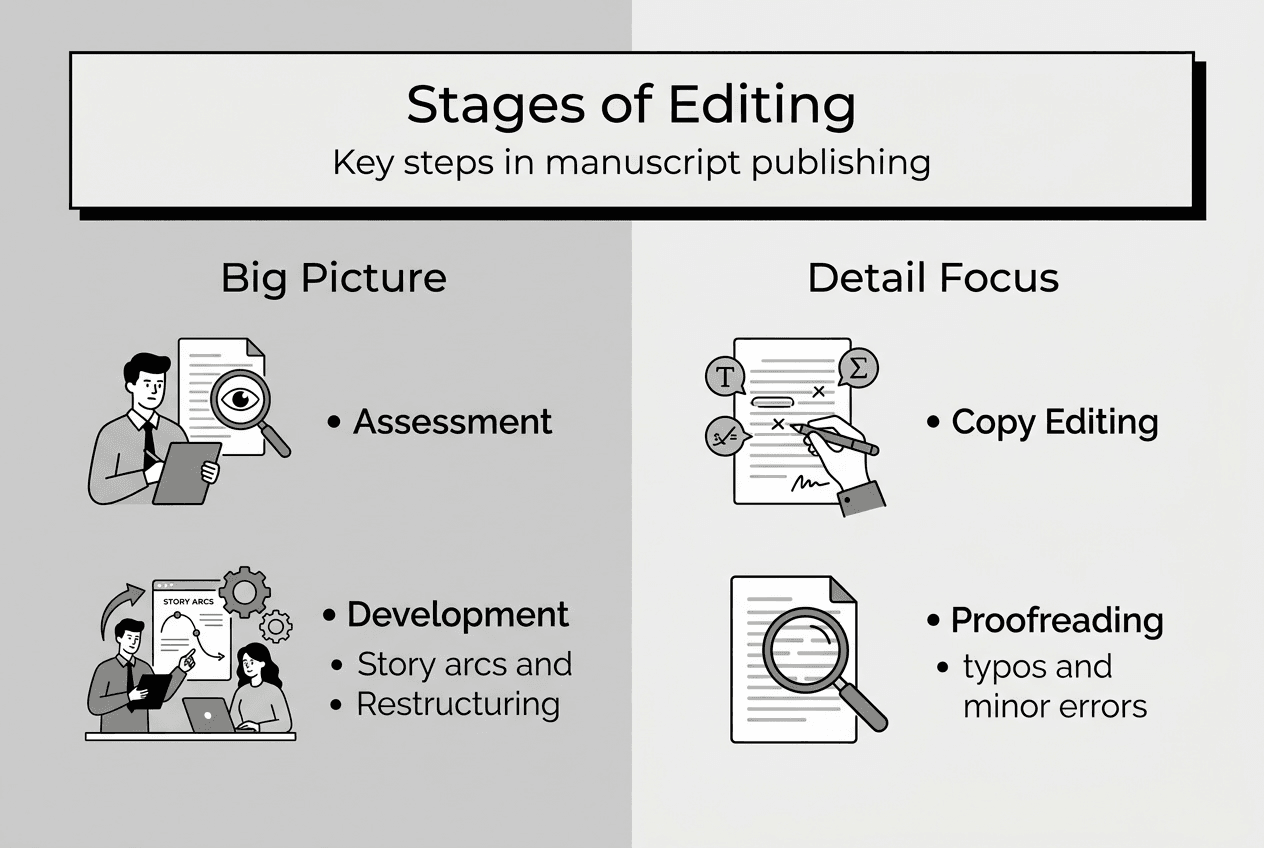
Understanding editorial work means recognizing that editing isn't a single task. It's a multi-stage process where different professionals focus on distinct aspects of your manuscript. Each type of editor brings specialized skills to improve your book at different levels, from the overarching story structure down to individual punctuation marks.
Editorial assessment provides a full manuscript overview, delivered as an editorial letter of feedback typically spanning 2 to 5 pages. This macro-level evaluation identifies your story's strengths and weaknesses without line-by-line edits. Think of it as a diagnostic report that tells you what needs fixing before you invest in deeper editing.
Developmental editing digs into the story itself. Your developmental editor examines plot logic, character arcs, pacing, narrative structure, and thematic coherence. Imagine you're driving to a destination but keep taking wrong turns. A developmental editor is like a GPS recalculating your route, helping you reach your story's destination more effectively. They'll suggest restructuring chapters, deepening character motivations, or tightening sagging middle sections.
Copy editing happens after your story structure is solid. Copy editors work at the sentence and paragraph level, refining your language, ensuring voice consistency, improving clarity, and correcting grammar and style issues. They make your prose shine without changing your unique voice. This stage transforms awkward phrasing into smooth, readable text that keeps readers engaged page after page.
Proofreading is your final safety net. Proofreaders catch typos, spelling errors, punctuation mistakes, and formatting inconsistencies that slipped through earlier rounds. They don't rewrite sentences or question story choices. Their job is pure quality control before your book reaches readers. For nonfiction and historical fiction, fact-checking also becomes critical at this stage to ensure accuracy and credibility.
Pro Tip: Understanding each editing type helps you choose the appropriate level of editorial support for your manuscript's current state and your budget constraints.
Here are the main editing types defined:
- Editorial assessment: High-level manuscript evaluation with written feedback on overall strengths and improvement areas
- Developmental editing: Deep structural work on plot, characters, pacing, and thematic elements
- Copy editing: Line-by-line language refinement for clarity, voice, grammar, and style
- Proofreading: Final error sweep for typos, spelling, punctuation, and formatting
- Fact-checking: Verification of factual claims, dates, and details in nonfiction or historical works
The typical editing journey follows these stages:
- Complete your first draft without worrying about perfection
- Self-edit and revise based on your own assessment
- Consider an editorial assessment if you're unsure about major story elements
- Work with a developmental editor to fix structural and story issues
- Revise your manuscript based on developmental feedback
- Hire a copy editor to refine language and style
- Make final revisions from copy editing suggestions
- Engage a proofreader for the last error check
- Publish your polished, professionally edited manuscript
Understanding these editor roles and processes empowers you to make informed decisions about which services your manuscript needs most. Not every book requires every stage, but knowing what's available helps you allocate resources wisely.
How editors enhance your manuscript's quality and success
Editorial feedback does more than fix mistakes. It transforms manuscripts by addressing fundamental storytelling problems that authors often can't see in their own work. When you're deep in your story, you know what you meant to convey, but readers only see what's actually on the page. Editors bridge that gap.
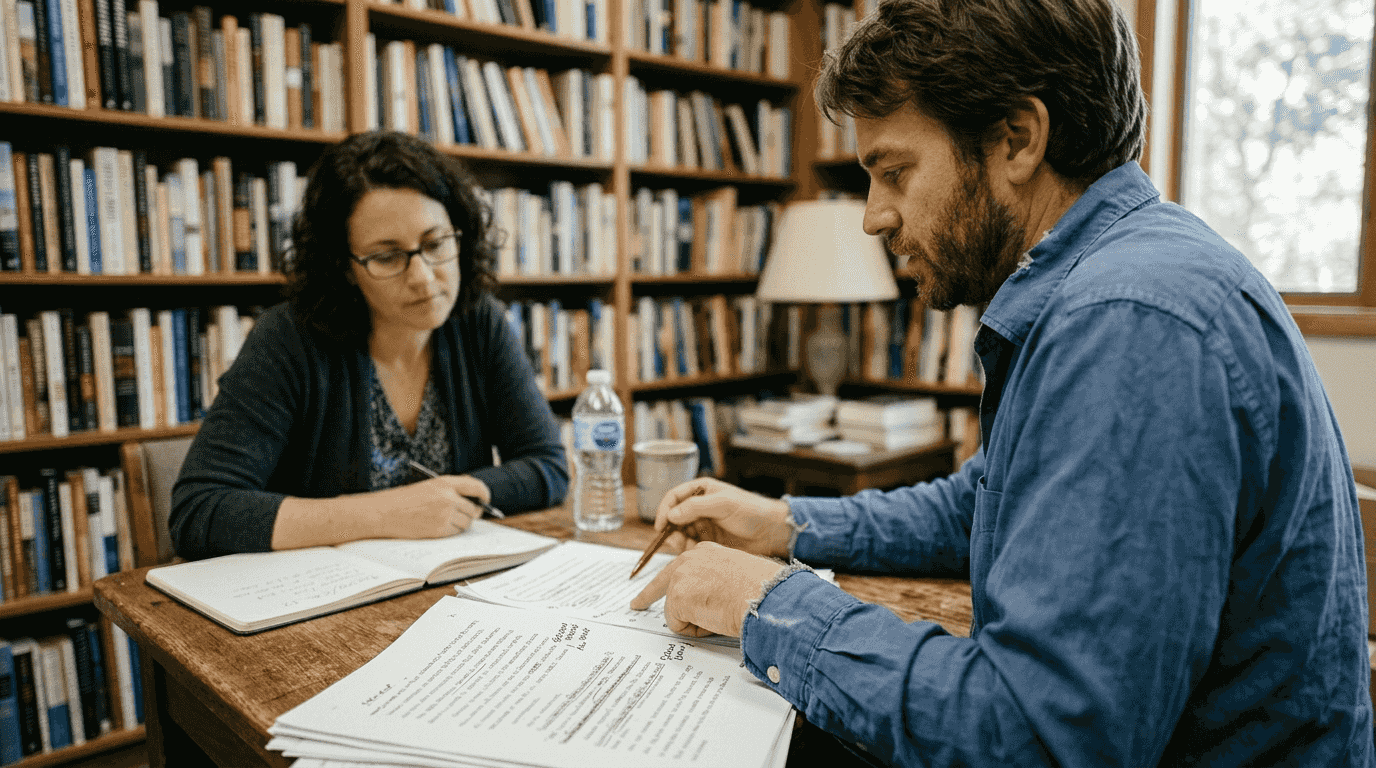
Developmental editors help you fix plot holes that undermine credibility, underdeveloped characters that feel flat, and pacing problems that lose reader interest. They identify where your story drags or rushes, where motivations feel unclear, and where emotional beats miss their mark. This level of feedback requires someone who understands story craft and can articulate what's working and what needs strengthening.
Editorial assessments can highlight the central themes of a story and how they connect to universal experiences, which is crucial for reaching a wide audience. When an editor identifies your book's deeper meaning, they help you amplify those themes throughout the narrative, creating resonance that elevates your work from entertaining to memorable.
Consider Christopher Parker's experience. After working with a developmental editor who connected deeply with his manuscript, Parker's book sold over 25,000 copies. His editor didn't just correct errors. She identified core themes he hadn't fully recognized himself, helping him weave them more powerfully through his narrative.
"The editor highlighted themes of grief and loss that were central to the story, helping the author understand and develop these elements more fully throughout the manuscript."
This kind of insight transforms good writing into compelling storytelling. The editor saw what Parker's story was really about beneath the surface plot, then showed him how to bring those themes forward. That's the difference between a manuscript that gets published and one that becomes successful.
Professional editorial feedback delivers multiple benefits:
- Identifies blind spots authors can't see in their own work
- Strengthens thematic coherence and emotional impact
- Improves marketability to agents, publishers, and readers
- Increases confidence in your manuscript's quality
- Provides objective assessment of what's working and what isn't
- Teaches you storytelling skills that improve future writing
Pro Tip: Seek editors who genuinely connect with your story's premise and themes, not just those with impressive credentials, for the most impactful feedback and collaboration.
The return on editorial investment isn't just about fixing problems. It's about unlocking your manuscript's full potential. Developmental editing improvements can mean the difference between a book that languishes and one that finds its audience, generates positive reviews, and builds your author platform for future releases.
Navigating editing options as a self-publishing author
Self-publishing offers creative freedom, but it also means you're responsible for every aspect of production, including editing. Self-publishing authors may be anxious about not knowing what they don't know, highlighting the importance of seeking professional editorial help. You don't have a publishing house's editorial team backing you, so understanding your options and budgeting appropriately becomes critical.
The financial reality of self-publishing includes significant editorial costs. Here's how typical self-publishing investments break down:
| Expense Category | Typical Cost Range | Percentage of Total | Expected Return |
|---|---|---|---|
| Developmental editing | $1,000 to $3,000 | 25% to 40% | Higher quality manuscript, better reviews |
| Copy editing | $500 to $1,500 | 15% to 25% | Professional polish, fewer errors |
| Proofreading | $300 to $800 | 10% to 15% | Error-free final product |
| Cover design | $300 to $1,500 | 10% to 25% | Increased visibility and sales |
| Formatting | $100 to $500 | 5% to 10% | Professional presentation |
| Marketing | $500 to $2,000 | 15% to 30% | Reader awareness and sales |
One author invested approximately $3,964 in book production costs, with editing costs totaling $1,650. That's over 40% of the total budget, but it's money well spent. Professional editing directly impacts reader satisfaction, reviews, and word-of-mouth recommendations.
You have several types of editors available:
- Freelance editors: Independent professionals offering flexible services and personalized attention
- Indie press editors: Editors who work with small independent publishers and sometimes take freelance clients
- Traditional house editors: Experienced professionals who may freelance on the side
- Editorial services companies: Firms that match authors with vetted editors
- Hybrid options: Editors who offer tiered services from assessments to full developmental edits
Prioritizing editorial services depends on your manuscript's needs and your budget. If your story structure is solid but your prose needs work, invest in copy editing. If you're unsure whether your plot holds together, start with an editorial assessment or developmental edit. Don't skip editing entirely to save money. Readers notice poor quality, and negative reviews are far more costly than editorial fees.
Pro Tip: Allocate at least 30% to 40% of your total self-publishing budget to professional editing and cover design, as these two elements most directly impact sales and reader satisfaction.
Vetting editors who understand your genre matters tremendously. A romance editor brings different expertise than a thriller editor. Genre conventions, reader expectations, and storytelling techniques vary widely. An editor familiar with your genre can spot where you've strayed from reader expectations or where you've hit the mark perfectly.
Good editing is an investment in marketability and sales, not an expense. The author workspace features available through modern platforms can help you organize editorial feedback and track revisions efficiently, maximizing the value you get from professional editing services.
Choosing the right editor for your manuscript
Finding the right editor isn't just about credentials. It's about finding someone who gets your story, communicates clearly, and brings both skill and enthusiasm to your project. The best editor for another author's thriller might not be the best fit for your literary fiction or memoir.
Evaluate potential editors using these criteria:
- Genre experience: Have they edited books similar to yours successfully?
- Editorial approach: Do they explain their process and what you can expect?
- Communication style: Are they responsive, clear, and professional in initial exchanges?
- Story connection: Do they express genuine interest in your manuscript's premise?
- References and samples: Can they provide testimonials or sample edits?
- Turnaround time: Does their schedule align with your publishing timeline?
- Pricing transparency: Are their rates clear and within your budget?
Choosing the right editor involves finding someone who not only has skills and experience but also understands and connects with the story. That connection makes the difference between generic feedback and insights that truly elevate your work.
Here's how full-time publishing editors compare to freelance editors:
| Factor | Full-Time Publishing Editors | Freelance Editors |
|---|---|---|
| Availability | Limited, often only through publisher contracts | Widely available, work directly with authors |
| Experience breadth | Deep experience with specific publisher's list | Varied experience across genres and publishers |
| Cost | Included in traditional publishing contract | Author pays directly, rates vary widely |
| Personalization | May have less time per manuscript | Often provide more personalized attention |
| Genre expertise | Strong in publisher's focus areas | Can specialize in niche genres |
| Communication | Through publisher channels | Direct author-editor relationship |
Before hiring an editor, ask these essential questions:
- What is your experience editing in my specific genre?
- Can you provide references from authors you've worked with recently?
- What does your editing process look like from start to finish?
- How do you handle disagreements about editorial suggestions?
- What is your typical turnaround time for a manuscript my length?
- Do you offer a sample edit so I can evaluate our fit?
- What file formats do you work with and how do you deliver feedback?
- Are revisions or follow-up questions included in your fee?
Good rapport boosts editorial results significantly. When you trust your editor and feel comfortable discussing your story's challenges, you're more likely to implement feedback effectively. If an editor makes you feel defensive or doesn't understand what you're trying to achieve, the relationship won't be productive no matter how skilled they are.
Pro Tip: Request a sample edit of 5 to 10 pages before committing to a full manuscript edit to ensure the editor's style, feedback approach, and communication work well for you.
The finding editors who connect with your story process takes time, but it's worth the effort. A great editor becomes a trusted partner in your publishing journey, someone who helps you grow as a writer while making your current manuscript the best it can be.
Discover editorial support and publishing resources at Librida
Now that you understand how editors transform manuscripts, you might wonder how to streamline the editing process and find inspiration from successfully published works. Librida offers AI publishing tools that assist authors with editing and publishing tasks, making professional-quality book production more accessible than ever.
Explore featured books that demonstrate editorial excellence for inspiration. The Lady and The Quill showcases polished storytelling, while Notes from a Slightly Unstable Life demonstrates how strong editing elevates personal narratives. These examples show what's possible when authors combine their creative vision with professional editorial support.
Librida's author workspace helps you organize feedback, track revisions, and manage the editorial process efficiently. Whether you're working with a professional editor or refining your manuscript independently, having the right tools makes the journey smoother and more productive.
Frequently asked questions
What is the role of an editor in publishing?
Editors guide manuscript development from initial concept through final publication, ensuring quality at every stage. They refine story structure, improve language clarity, catch errors, and help authors communicate their vision effectively to readers. In traditional publishing, editors work within publishing houses, while self-publishing authors hire freelance editors directly.
How do developmental editing and copy editing differ?
Developmental editing focuses on big-picture story elements like plot coherence, character development, pacing, and thematic depth before the manuscript is polished. Copy editing happens after the story structure is solid, refining language, voice, grammar, and style at the sentence and paragraph level. Think of developmental editing as building the house, and copy editing as interior design and finishing touches.
Why should self-publishing authors invest in professional editing?
Professional editing dramatically improves manuscript quality, thematic depth, and sales potential by catching issues authors can't see in their own work. It helps avoid costly mistakes like plot holes, inconsistent characters, and grammar errors that lead to negative reviews and poor reader satisfaction. The investment typically returns through higher sales, better reviews, and stronger author credibility.
What should authors look for when choosing an editor?
Look for genre-specific experience, strong editorial skills, clear communication, and genuine enthusiasm for your story's premise. Request sample edits to evaluate their feedback style and approach before committing to a full manuscript edit. Check references from previous clients and ensure their turnaround time and pricing align with your publishing timeline and budget.