

Publishing your book is a major achievement, but over 90% of self-published books sell fewer than 250 copies without active marketing. Book marketing is the strategic process of promoting your book to reach readers, build visibility, and drive sales. This guide covers proven marketing strategies, innovative AI tools, and actionable frameworks to help self-publishing authors succeed in 2026.
Table of Contents
- Understanding Book Marketing: Definition And Scope
- Why Marketing Is Essential For Self-Publishing Authors
- Harnessing Innovative Digital And AI Tools In Book Marketing
- Identifying And Targeting The Right Audience
- Comparing Traditional And Modern Marketing Techniques
- Building An Effective Book Marketing Framework
- Measuring And Optimizing Your Book Marketing Success
- Explore Librida's AI Marketing Tools To Boost Your Book Sales
- Frequently Asked Questions
Key takeaways
| Point | Details |
|---|---|
| Marketing spans pre-launch to post-launch | Book marketing includes building anticipation before release, managing launch activities, and sustaining momentum afterward. |
| Self-published authors need proactive marketing | Authors who market actively sell 2-3 times more books than those relying solely on organic discovery. |
| AI tools reduce marketing workload | Modern technology cuts manual marketing tasks by up to 40%, improving efficiency and campaign performance. |
| Targeting the right audience triples ROI | Focused campaigns directed at ideal readers dramatically outperform broad, untargeted marketing efforts. |
| Data-driven optimization increases sales | Tracking key metrics enables continuous improvement and 50% better budget allocation. |
Understanding book marketing: definition and scope
Book marketing encompasses all activities designed to increase your book's visibility, engage potential readers, and drive sales. The process includes three distinct phases: pre-launch, launch, and post-launch activities.
Pre-launch marketing builds anticipation weeks or months before your release date. This phase includes creating advance reader copies, building an email list, securing early reviews, and generating buzz on social media. Launch marketing focuses on maximizing visibility during the critical first weeks when algorithms favor new releases.
Post-launch marketing sustains momentum after the initial release period. This ongoing effort maintains reader interest, attracts new audiences, and keeps your book competitive in crowded marketplaces. Effective campaigns typically span several months, with concentrated effort around the release date.
Successful book marketing combines multiple tactics:
- Social media engagement and content creation
- Paid advertising on platforms like Amazon, Facebook, and BookBub
- Email marketing campaigns to build and nurture your reader list
- Content marketing through blogs, podcasts, and guest appearances
- Strategic outreach to book reviewers, bloggers, and influencers
Understanding this full scope helps you plan comprehensive campaigns that address each phase strategically.
Why marketing is essential for self-publishing authors
Marketing separates successful self-published authors from those who struggle to find readers. Without active promotion, even excellent books remain invisible in marketplaces containing millions of titles.

The statistics are sobering. Most self-published books without marketing efforts sell fewer than 250 copies over their lifetime. In contrast, authors who market actively sell 2-3 times more than those depending on organic discovery alone.
Traditional publishers invest heavily in marketing because they understand this reality. Self-published authors must assume this responsibility themselves or hire professionals to manage campaigns. The investment pays dividends through increased visibility and sales.
Standing out requires strategic outreach targeting your specific audience. Generic marketing wastes resources and produces minimal results. Your campaigns must align with your book's genre, themes, and the platforms where your ideal readers spend time.
Marketing also builds your author platform for future releases. Each campaign grows your email list, expands your social media following, and strengthens your relationship with readers. These assets compound over time, making each subsequent book launch more effective.
The alternative to marketing is obscurity. Your book competes against thousands of new releases daily. Without deliberate promotion, potential readers simply never discover your work, regardless of quality. Modern audio formats like AI generated audiobooks expand your reach when combined with solid marketing strategies.
Harnessing innovative digital and AI tools in book marketing
Artificial intelligence transforms how authors approach marketing by automating time-consuming tasks and improving campaign precision. These tools level the playing field, allowing independent authors to compete with traditionally published books.
AI assists with writing optimized book descriptions that convert browsers into buyers. Natural language processing analyzes successful descriptions in your genre, suggesting compelling copy that highlights your book's unique appeal. This eliminates guesswork and improves conversion rates.
Automation streamlines social media management by scheduling posts, suggesting optimal posting times, and generating engaging content ideas. AI-powered marketing tools reduce time investment by up to 40%, freeing authors to focus on writing while maintaining consistent promotional presence.
Targeted advertising becomes more effective with AI-driven audience analysis. Machine learning identifies reader segments most likely to enjoy your book based on purchasing patterns, reading habits, and demographic data. This precision targeting maximizes return on ad spend.
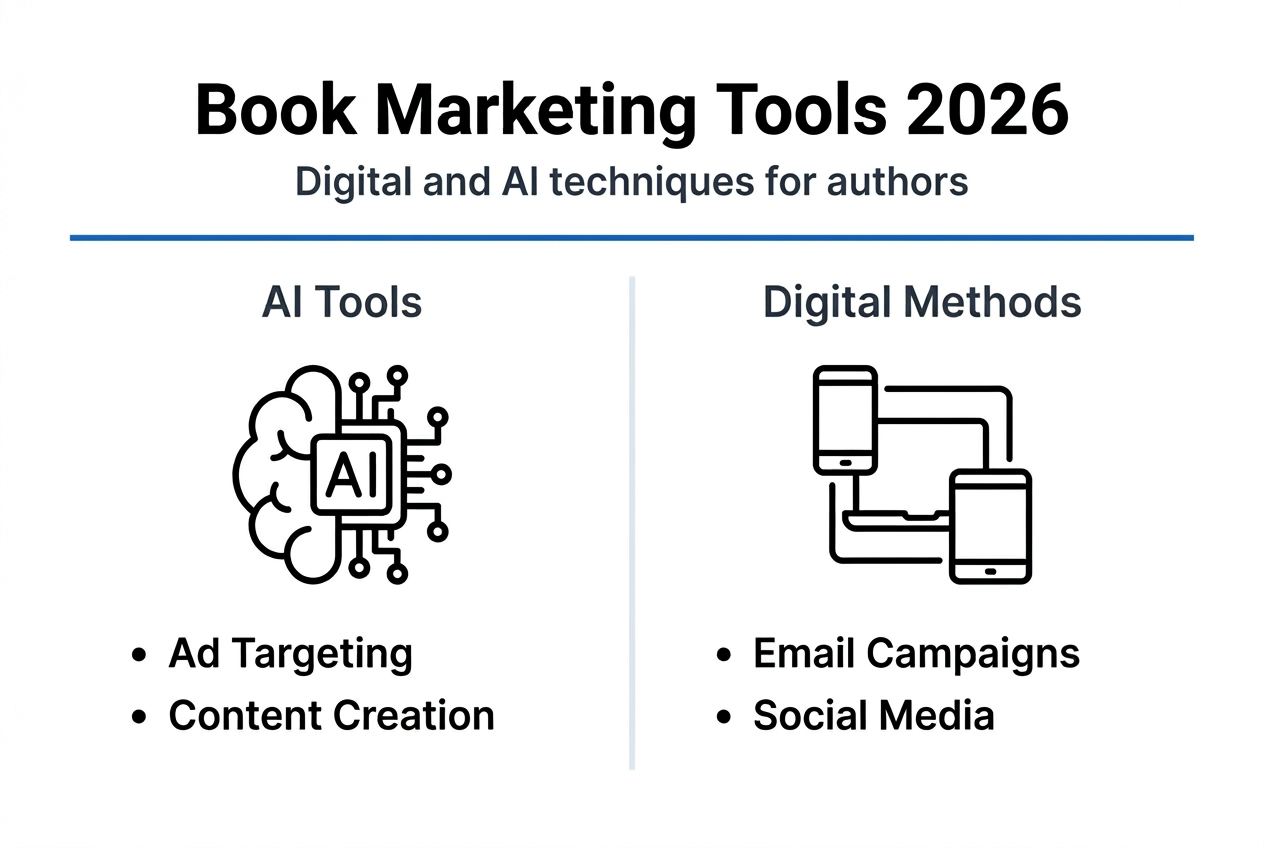
Case studies demonstrate impressive results. Authors using AI-powered tools report significant sales increases compared to manual marketing efforts. The technology handles repetitive tasks while you focus on strategy and creative decisions.
Key benefits include:
- Automated ad targeting based on reader behavior patterns
- Dynamic pricing optimization that adjusts to market conditions
- Predictive analytics forecasting campaign performance
- Content generation for social media posts and email campaigns
Pro Tip: Start with one AI tool focused on your biggest marketing bottleneck. Master that tool before expanding to others, avoiding overwhelm while building confidence.
Explore how AI video tools create compelling book trailers that capture attention across social platforms. Understanding AI content safety ensures your marketing remains ethical and effective. Learn how AI tools simplify marketing for small businesses and authors alike.
Identifying and targeting the right audience
Successful marketing begins with crystal-clear understanding of your ideal readers. Generic campaigns targeting everyone waste resources and produce disappointing results. Precision targeting multiplies effectiveness.
Start by analyzing your book's genre, themes, and the demographics of readers who enjoy similar works. Romance readers differ significantly from thriller fans in age, interests, and platform preferences. Science fiction audiences consume content differently than literary fiction readers.
Targeted campaigns can triple your return on marketing investment compared to broad approaches. This dramatic difference stems from reaching people already inclined toward your book's subject matter and style.
Follow these steps to define your audience:
- Research bestselling books similar to yours and analyze their reader reviews
- Identify common themes in positive reviews that reveal what readers value
- Survey your existing readers or beta readers about their interests and habits
- Examine social media groups and communities where your ideal readers gather
- Study competitor author followings to understand demographic patterns
- Use Amazon's "customers also bought" data to map reader preferences
Broad, untargeted marketing burns through budgets with minimal conversions. Every dollar spent reaching uninterested audiences is wasted. Focus your messaging directly on readers most likely to appreciate your specific book.
Research audience interests and consumption habits before selecting channels and creating content. Romance readers might engage heavily on Instagram and BookTok, while business book readers prefer LinkedIn and industry podcasts. Match your platforms to audience preferences.
Pro Tip: Create a detailed reader persona including age, interests, reading habits, and pain points your book addresses. Reference this persona when making marketing decisions to maintain focus.
Building connections with reader communities where your audience naturally congregates creates organic promotion opportunities and valuable feedback loops.
Comparing traditional and modern marketing techniques
Authors today can choose between traditional marketing methods and digital strategies, each offering distinct advantages and limitations. Understanding both helps you allocate resources effectively.
Traditional marketing includes book tours, print advertisements, local bookstore events, radio interviews, and newspaper features. These methods build local presence and credibility through face-to-face connections.
| Method | Reach | Cost | ROI | Best For |
|---|---|---|---|---|
| Book tours | Local/Regional | High | Low to Medium | Established authors, local audiences |
| Print ads | Regional | High | Low | Literary fiction, older demographics |
| Local events | Local | Medium | Medium | Community building, local authors |
| Digital ads | Global | Low to High | High | Most genres, targeted campaigns |
| Social media | Global | Low | High | Building author platform, engagement |
| Email marketing | Targeted | Low | Very High | Direct reader relationships |
Traditional methods excel for certain situations. Local bookstore relationships matter for regional authors. Radio interviews reach specific demographics effectively. Book festivals provide networking opportunities and industry connections.
However, traditional marketing typically costs more and reaches fewer people than digital alternatives. Geographic limitations restrict audience size. Measuring results proves difficult, making optimization challenging.
Digital marketing provides wider reach, superior targeting capabilities, and built-in analytics. You can test multiple approaches simultaneously, measuring results in real time and adjusting based on performance data.
Key digital advantages include:
- Global reach regardless of your physical location
- Precise audience targeting based on interests and behaviors
- Lower cost barriers enabling experimentation
- Immediate performance feedback for rapid optimization
- Automation reducing manual effort requirements
Digital ROI is estimated 25% to 40% higher than traditional methods for most book genres in 2026. The gap widens as advertising platforms improve targeting algorithms and automation capabilities.
A combined approach works well depending on your book type and audience. Literary fiction targeting older readers might benefit from both print ads and digital campaigns. Genre fiction readers typically concentrate online, making digital focus more efficient.
Building an effective book marketing framework
Structured planning transforms scattered marketing efforts into cohesive campaigns that drive measurable results. Follow this six-phase framework to create and execute successful book marketing.
-
Set clear, measurable goals: Define specific targets like selling 1,000 copies in three months or building an email list of 500 subscribers. Quantifiable goals focus efforts and establish success criteria. Avoid vague objectives like "increase awareness" that provide no measurement standard.
-
Conduct thorough audience research: Identify exactly who will buy your book and where they spend time online. Analyze competitor audiences, survey beta readers, and study purchasing patterns in your genre. This intelligence guides every subsequent decision.
-
Select appropriate marketing channels: Choose platforms matching your audience's habits and your content strengths. If your readers congregate on Instagram, prioritize visual content there. If they prefer podcasts, pursue guest appearances and audio marketing.
-
Create compelling, audience-focused content: Develop marketing materials addressing reader desires and pain points your book solves. Write from the reader's perspective, emphasizing benefits over features. Test different messages to identify what resonates.
-
Launch coordinated campaigns: Execute your plan with consistent messaging across chosen channels. Coordinate timing for maximum impact, concentrating efforts around your release date while maintaining pre-launch anticipation building.
-
Measure performance and optimize: Track key metrics continuously, identifying high-performing tactics and eliminating underperformers. Reallocate budget toward proven strategies. This iterative improvement compounds results over time.
Each phase builds on previous work, creating a cohesive system rather than disconnected tactics. Clear goals provide direction. Research ensures relevance. Channel selection maximizes efficiency. Quality content engages audiences. Coordinated launches amplify impact. Measurement enables optimization.
Revisit this framework for each book release, refining your approach based on previous campaign learnings. Your marketing skills improve with practice, making subsequent launches progressively more effective.
Measuring and optimizing your book marketing success
Data transforms guesswork into strategy by revealing which marketing efforts drive sales and which waste resources. Authors who track key performance indicators optimize spending and increase effectiveness by 50%.
Focus on metrics directly tied to your goals. If your objective is sales, prioritize conversion rates and revenue per ad dollar spent. If building your platform matters most, track email list growth and social media engagement rates.
| Metric | What It Measures | Why It Matters | Target Range |
|---|---|---|---|
| Click-Through Rate (CTR) | Percentage clicking your ads | Ad relevance and appeal | 1% to 3% |
| Conversion Rate | Visitors who purchase | Landing page effectiveness | 2% to 5% |
| Cost Per Acquisition (CPA) | Cost to acquire one customer | Campaign profitability | Below book profit |
| Email Open Rate | Subscribers opening emails | List engagement quality | 20% to 30% |
| Return on Ad Spend (ROAS) | Revenue per ad dollar | Overall campaign ROI | 2:1 minimum |
Regular measurement identifies top performers worth increased investment. If Facebook ads generate three times more sales than Amazon ads at similar cost, shift budget accordingly. Data removes emotional attachment to underperforming tactics.
Key metrics to monitor include:
- Click-through rates showing how many people engage with your ads
- Conversion rates revealing what percentage of visitors actually buy
- Sales volumes tracking total revenue generated by each campaign
- Email list growth measuring your expanding reader base
- Social media engagement indicating audience connection strength
Monitoring engagement and audience growth informs future content creation. Posts generating high interaction reveal what resonates with your readers. Double down on successful content types while eliminating formats that fall flat.
Set up tracking before launching campaigns. Install conversion pixels, create unique landing pages for different ad sources, and use trackable links in all marketing materials. This infrastructure provides the data needed for optimization.
Review metrics weekly during active campaigns, adjusting underperforming elements quickly. Monthly reviews identify longer-term trends guiding strategic decisions. Annual analysis reveals which marketing investments delivered best overall returns.
Explore essential paid advertising metrics and key digital marketing metrics for 2026 to deepen your analytical capabilities.
Explore Librida's AI marketing tools to boost your book sales
Transform your marketing approach with Librida's AI-powered solutions designed specifically for authors. Our platform streamlines complex marketing tasks, helping you reach more readers while spending less time on promotional activities.

Librida's advanced AI tools automate repetitive marketing work, from crafting compelling book descriptions to optimizing social media schedules. You maintain creative control while technology handles execution details, multiplying your effectiveness without multiplying your workload.
Discover how successful authors leverage our platform by exploring featured books like The Quill & The Courtesan and The Lady and The Quill. See real results from authors who transformed their marketing with AI assistance.
Visit Librida's AI API Documentation to integrate powerful marketing automation into your author workflow and start building campaigns that convert browsers into loyal readers.
Frequently asked questions
What is book marketing?
Book marketing encompasses all strategic activities promoting your book to increase visibility and drive sales. It includes pre-launch buzz building, launch day promotions, ongoing reader engagement, social media campaigns, paid advertising, and email marketing. Effective marketing reaches your target audience through channels where they naturally spend time.
How can self-published authors identify their target audience?
Research your genre's demographics by analyzing similar bestselling books and reading their reviews for patterns. Survey your beta readers about their interests and reading habits. Join social media groups where your ideal readers gather, observing their discussions and preferences. Use Amazon's "customers also bought" data to map reader overlap with comparable titles.
What are the benefits of using AI tools in book marketing?
AI tools reduce time spent on description writing, ad targeting, and content creation by up to 40%. They automate social media scheduling, optimize ad performance through machine learning, and suggest high-converting copy based on successful patterns. This technology handles repetitive tasks while you focus on strategy and writing.
How do authors measure the success of their marketing campaigns?
Track click-through rates showing ad engagement, conversion rates revealing purchase behavior, and total sales volume generated by each campaign. Monitor cost per acquisition to ensure profitability and return on ad spend to evaluate overall effectiveness. Use these metrics to identify winning strategies worth expanded investment and eliminate underperforming tactics quickly.