

Most aspiring authors believe traditional publishing is the only path to legitimacy, yet the numbers tell a different story. The self-publishing market grows at 16.7% annually, while traditional publishing expands at just 1.2%. With traditional publishers accepting under 1% of submissions and most published books selling fewer than 1,000 copies, independent publishing powered by AI tools offers aspiring authors a faster, more accessible route to reach readers and build sustainable writing careers.
Table of Contents
- The Rise Of Independent Publishing And Market Dynamics
- How AI Tools Revolutionize Independent Publishing
- Comparing Traditional And Independent Publishing: Benefits And Considerations
- Practical Steps To Publish Independently Using AI Tools
- Explore Librida's AI-Powered Publishing Platform
- FAQ
Key takeaways
| Point | Details |
|---|---|
| Market momentum favors indie | Self-publishing grows 16.7% annually while traditional publishing expands only 1.2%, creating unprecedented opportunities for independent authors. |
| AI accelerates publishing timelines | Authors using AI tools reduce development cycles from 6-12 months to 2-4 weeks, cutting costs by up to 80%. |
| Traditional barriers remain high | Publishers accept less than 1% of submissions and most books sell under 1,000 copies, making indie routes more viable. |
| Quality meets efficiency | Combining AI-generated content with human editing maintains professional standards while eliminating traditional gatekeepers. |
The rise of independent publishing and market dynamics
The self-publishing industry has transformed from a niche alternative into a dominant force reshaping how books reach readers. The market surpassed $2 billion in 2025, growing from $1.85 billion in 2024, demonstrating explosive expansion that dwarfs traditional publishing's modest gains. This growth reflects fundamental shifts in author preferences and reader consumption patterns.
Traditional publishing faces structural challenges that limit opportunities for new voices. The acceptance rate hovers below 1%, creating a bottleneck that rejects talented writers based on commercial risk assessments rather than creative merit. Even authors who secure traditional deals often face disappointment, with the majority of published books selling fewer than 1,000 copies despite publisher backing and distribution networks.
Independent publishing removes these barriers entirely. Authors control their creative vision, retain higher royalty percentages, and reach readers without waiting years for approval. The stigma once attached to self-publishing has evaporated as indie authors dominate bestseller lists and win major literary awards.
| Publishing Model | Annual Growth Rate | Market Size 2025 | Author Acceptance |
|---|---|---|---|
| Self-Publishing | 16.7% | $2+ billion | 100% (author choice) |
| Traditional Publishing | 1.2% | Declining share | Under 1% |
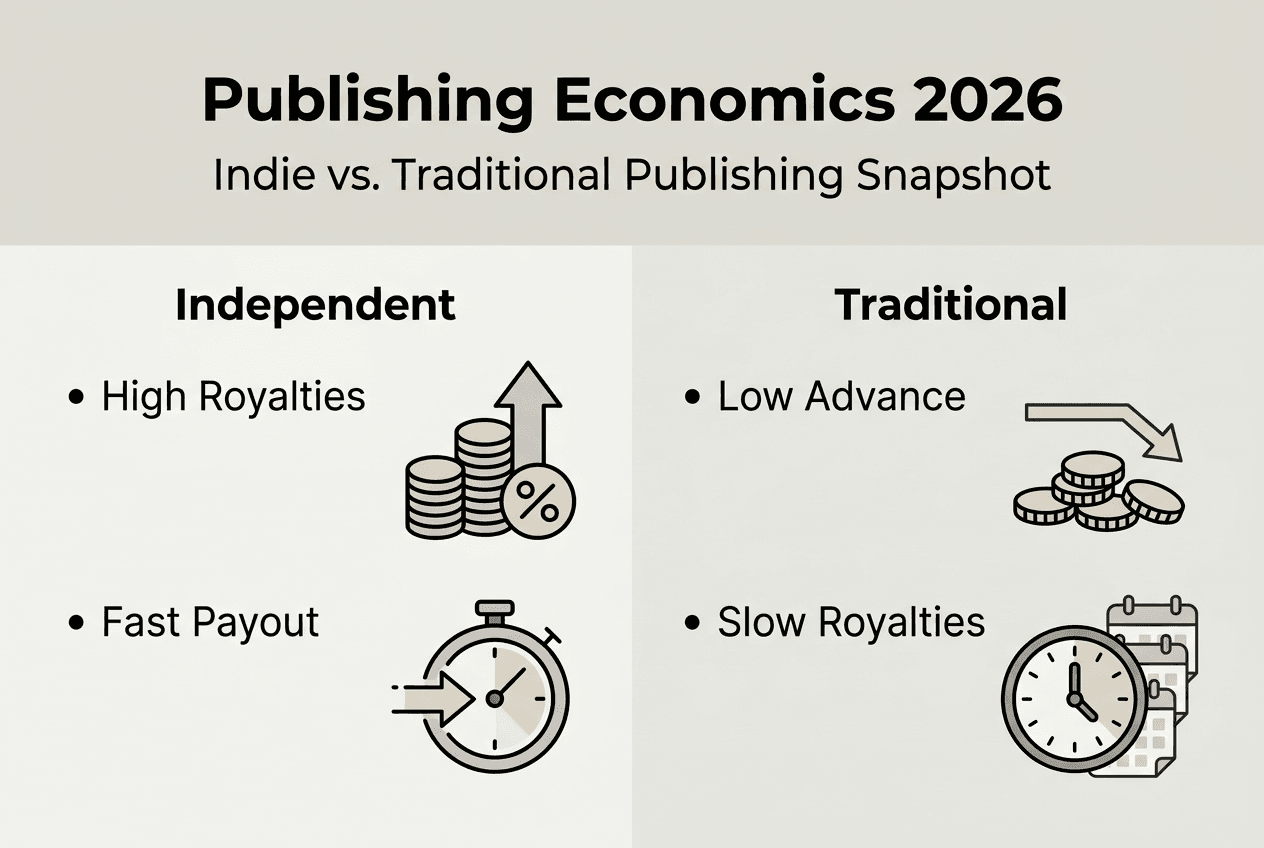
The economics favor independence. Traditional publishers offer advances averaging $5,000 to $15,000 for debut authors, but these advances must earn out before royalties begin. Indie authors keep 35% to 70% of each sale from day one, building income immediately. For authors writing in popular genres or niche markets, this financial model proves far more lucrative.
Technology democratizes publishing infrastructure that once required massive capital investment. Print-on-demand eliminates inventory risk, digital distribution reaches global markets instantly, and platforms like Amazon KDP provide free publishing tools. Authors who once needed publishing houses to manufacture and distribute books now access the same readers with zero upfront costs.
The rise of AI-generated audiobooks further expands indie author opportunities. Audiobook production traditionally cost thousands of dollars and required studio time, but AI narration tools now create professional audio editions for under $100. This levels the playing field, allowing indie authors to compete in the fastest-growing book format.
How AI tools revolutionize independent publishing
Artificial intelligence has compressed publishing timelines that once stretched across months into workflows measured in weeks. The Xynapse Traces imprint achieved 90% reduction in time-to-market and cut costs by 80% compared to traditional methods, demonstrating AI's transformative impact on book production. These efficiency gains don't sacrifice quality when authors combine AI assistance with human creativity and editorial judgment.
AI writing tools generate complete first drafts rapidly. One publisher documented creating 30,000-word novellas in 30 minutes using AI systems, enabling experimentation with multiple concepts before committing to extensive development. While these drafts require human refinement, they eliminate the blank page paralysis that stalls many authors and provide structural frameworks for storytelling.
The Aivolut Books platform enabled users to create 12 complete manuscripts in 90 days, with 8 books successfully published to Amazon KDP generating revenue. This productivity leap allows authors to test market demand, build series momentum, and establish reader bases faster than traditional publishing cycles permit.
AI Publishing Tasks:
- Generating story outlines and plot structures based on genre conventions
- Writing first draft prose that authors refine and personalize
- Creating metadata including titles, descriptions, and keyword optimization
- Developing cover design briefs with visual concepts and style guidance
- Formatting manuscripts for multiple distribution platforms
- Generating marketing copy for promotional campaigns
| Publishing Phase | Traditional Timeline | AI-Assisted Timeline | Cost Reduction |
|---|---|---|---|
| Manuscript Development | 6-12 months | 2-4 weeks | 80% |
| Cover Design | 2-4 weeks | 1-3 days | 70% |
| Editing & Formatting | 4-8 weeks | 1-2 weeks | 60% |
| Marketing Materials | 2-3 weeks | 2-3 days | 75% |
Pro Tip: Use AI to generate three different story openings for your concept, then select the strongest hook and develop it with your unique voice and perspective for optimal results.
AI excels at tasks requiring pattern recognition and data synthesis. Book metadata optimization, category selection, and keyword research benefit enormously from AI analysis of successful comparable titles. These technical elements directly impact discoverability, yet many authors struggle with them due to lack of marketing expertise.
The technology enables rapid iteration and testing. Authors experiment with different story concepts, covers, and marketing angles without significant financial risk. This agility mirrors successful startup methodologies applied to creative work, allowing data-driven decisions about which projects deserve full development investment.

AI swarm autonomous storytelling represents the frontier of collaborative creation, where multiple AI agents contribute different aspects of story development. While still emerging, these systems hint at future workflows where authors orchestrate AI teams rather than writing every word manually.
Marketing benefits equally from AI assistance. Book trailers created with AI video tools cost a fraction of professional video production while delivering professional results. Social media content, email campaigns, and advertising copy all benefit from AI generation, freeing authors to focus on strategic decisions and authentic reader engagement.
Authors exploring AI tools for publishing discover ecosystems of specialized applications addressing every publishing challenge. The key lies in understanding which tasks benefit from automation versus those requiring human judgment and creativity.
Comparing traditional and independent publishing: benefits and considerations
Traditional publishing offers career prestige and validation from established institutions. Authors gain access to professional editors, designers, and marketing teams without upfront investment. Bookstore placement and media coverage come easier with publisher backing, and some readers still prefer traditionally published books, associating them with quality gatekeeping.
However, traditional authors view publishing as a career while indie authors run businesses balancing art and commerce. This fundamental difference shapes every decision from contract terms to creative control. Traditional contracts typically grant publishers rights for the book's lifetime plus 70 years, while indie authors retain all rights permanently.
Independent publishing demands entrepreneurial skills beyond writing. Authors manage cover design, formatting, distribution, marketing, and customer service. This workload overwhelms some writers who prefer focusing solely on craft, but others thrive on the control and direct reader relationships indie publishing enables.
| Aspect | Traditional Publishing | Independent Publishing |
|---|---|---|
| Timeline to Publication | 18-36 months | 2-12 weeks |
| Upfront Costs | $0 (publisher pays) | $0-$3,000 (optional services) |
| Creative Control | Limited (publisher decides) | Complete (author decides) |
| Royalty Rates | 8-15% of cover price | 35-70% of cover price |
| Rights Retention | Publisher owns for life+70 years | Author retains all rights |
Quality concerns often arise in indie publishing discussions, but combining human editors with AI maintains professional standards while reducing barriers and costs. The best indie books match or exceed traditional publishing quality, while poorly executed books exist in both categories. Readers increasingly judge books by reviews and samples rather than publisher logos.
Sales potential varies dramatically based on genre, marketing skill, and audience building. Breakout indie successes like Hugh Howey and Andy Weir prove independent authors can reach massive audiences, but most authors in both categories sell modestly. The difference lies in royalty rates making modest sales more profitable for indie authors.
Choose independent publishing when:
- You want rapid publication to test market demand or build momentum
- Your genre has strong self-publishing markets (romance, science fiction, thriller)
- You possess or can develop marketing and business skills
- Creative control and rights retention matter more than institutional validation
- You write prolifically and want to publish multiple books annually
Consider traditional publishing when:
- You write literary fiction or categories where traditional dominates
- You lack time or interest in business aspects of publishing
- Bookstore placement and traditional media coverage are priorities
- You want publisher investment in editing, design, and marketing
- Institutional validation matters for your career goals
Pro Tip: Many successful authors pursue hybrid strategies, publishing some books independently while seeking traditional deals for others, maximizing advantages of both models based on individual project needs.
The AI content safety considerations matter equally in both publishing models. Authors must ensure AI-assisted content meets platform guidelines and reader expectations regardless of publishing path chosen. Transparency about AI use builds trust, while attempting to hide AI involvement risks backlash if discovered.
Practical steps to publish independently using AI tools
Successful independent publishing using AI follows a structured workflow balancing automation with human creativity. The process begins with concept development and extends through publication and marketing, with AI accelerating each phase while authors maintain creative direction and quality control.
Step-by-step AI-assisted publishing process:
-
Develop your concept by brainstorming story ideas, target audience, and genre positioning. Use AI to generate premise variations and identify comparable successful titles in your category.
-
Generate your first draft using AI writing tools to create initial chapters or complete manuscripts. Provide detailed prompts including genre, tone, character descriptions, and plot points to guide AI output.
-
Edit and refine content by reviewing AI-generated text critically, rewriting weak sections, and injecting your unique voice. Focus on character development, dialogue authenticity, and emotional resonance that AI struggles to create.
-
Create professional covers and metadata by using AI to generate design concepts and visual briefs, then working with designers or DIY tools. AI tools generate metadata, category recommendations, and keyword lists, but validate these against actual market research.
-
Format and publish your manuscript using platform-specific guidelines for Kindle, print, and other formats. Upload to Amazon KDP, Draft2Digital, or other distributors, setting pricing based on comparable titles and royalty calculations.
-
Market your book using AI-generated social media content, email campaigns, and advertising copy. Focus on building your author platform and connecting authentically with readers rather than relying solely on AI-generated promotional material.
The Librida AI API documentation provides technical integration options for authors wanting custom workflows. Developers and tech-savvy authors can build specialized tools addressing their specific publishing needs, from automated formatting to personalized reader recommendation engines.
Pro Tip: Generate three complete first drafts of your opening chapter using different AI prompts, then manually combine the strongest elements from each version to create a hybrid that showcases AI efficiency enhanced by human editorial judgment.
Audio editions expand your reach significantly. AI-generated audiobooks now sound remarkably natural, with some AI narrators indistinguishable from human voice actors in blind tests. Creating audio editions costs under $100 and opens the fastest-growing segment of book sales.
Success in independent publishing requires treating your work as a business while preserving artistic integrity. Track sales data, analyze reader feedback, and adjust your approach based on results. AI tools provide analytics and insights, but you must interpret data and make strategic decisions about which projects deserve continued investment.
The learning curve for indie publishing has flattened dramatically thanks to AI assistance. Tasks that once required specialized expertise like cover design, metadata optimization, and ad copywriting now become accessible to any author willing to learn basic AI prompting and quality evaluation skills.
Explore Librida's AI-powered publishing platform
You've learned how independent publishing combined with AI tools creates unprecedented opportunities for aspiring authors. Librida transforms these insights into practical reality with integrated AI systems designed specifically for book creation and publishing workflows.
Our platform guides you through every stage from initial concept to published book. Access AI API documentation to explore technical capabilities and integration options for custom publishing workflows. See real examples like The Quill & The Courtesan and Notes from a Slightly Unstable Life showcasing what's possible when authors combine creativity with AI assistance. Start your independent publishing journey today with tools that respect your vision while accelerating your path to publication.
FAQ
Can AI fully replace human authors in independent publishing?
AI assists with drafting, formatting, and technical tasks but cannot replicate human creativity, emotional depth, and unique perspectives that make stories resonate. The most successful approach combines AI efficiency for initial drafts and repetitive tasks with human refinement that adds authentic voice, nuanced characterization, and meaningful themes readers connect with emotionally.
How much does it cost to publish independently using AI tools?
You can publish for zero upfront cost using free AI writing tools and platform publishing services like Amazon KDP. Optional investments in professional editing ($500-$2,000), custom cover design ($100-$500), and AI premium subscriptions ($20-$50 monthly) improve quality but aren't required. Most successful indie authors invest $500-$1,500 per book for professional results.
Will readers accept books written with AI assistance?
Readers care about story quality and entertainment value, not creation methods. Books combining AI efficiency with human creativity and editing perform identically to traditionally written books when quality matches reader expectations. Transparency about AI use builds trust, but the story itself determines reader satisfaction and reviews.
What genres work best for AI-assisted independent publishing?
Romance, science fiction, fantasy, thriller, and mystery genres thrive in indie publishing with strong AI support for plot structure and genre conventions. Literary fiction and memoir require more human creativity and voice, making AI less useful beyond basic drafting. Genre fiction with established reader expectations and series potential maximizes AI advantages.
How long does it take to publish a book independently with AI?
Complete publishing timelines range from two weeks to three months depending on book length, quality standards, and author experience. AI reduces drafting from months to days, but editing, cover design, and marketing preparation still require time. Rush publishing in two weeks is possible but most authors spend four to eight weeks ensuring professional quality before launch.
Recommended
- Librida — Create, Read, and Publish Books
- Librida — Create, Read, and Publish Books
- Notes from a Slightly Unstable Life by Mikael Löwgren | Librida
- Librida — Create, Read, and Publish Books
- Viaggi Fotografici - Libri Interior Design - Mino Di Vita
- Nectar Blog | Setting Goals Isn't Enough: 5 Steps for Creating a Roadmap to Sell on Amazon