

TL;DR:
- An author platform enables writers to reach and mobilize engaged audiences to take action, including buying or sharing books.
- Building owned assets like email lists and author websites offers greater control and durability than social media followers, which are subject to algorithm changes.
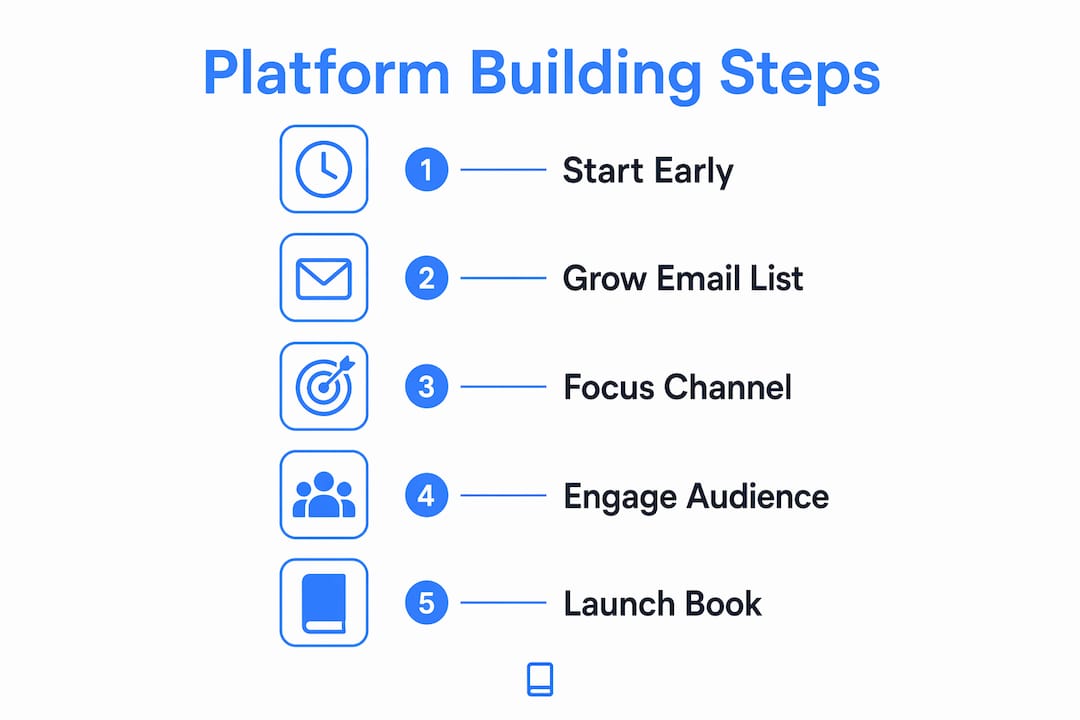
- Starting early and consistently developing your platform, ideally 12 to 18 months before launch, significantly improves publishing success.
An author platform is defined as the infrastructure that enables a writer to reach and mobilize an engaged audience to take action at scale. The role of author platforms goes far beyond social media follower counts. It determines whether your book launch sells 2,000 copies or 50,000, and whether a publisher sees you as a viable investment or a financial risk. Tools like email lists, author websites, and focused social media channels form the core of any working platform. Email subscribers convert to book buyers at rates 10 to 15 times higher than social media followers, which means your list is your most valuable career asset. Start building before your book is finished.
What is the role of author platforms in your writing career?
An author platform is not your Instagram following or your Twitter bio. A platform means the ability to move people to act, specifically to buy, share, and advocate for your work. The industry term is "author platform," and it encompasses every channel and asset you control to reach readers directly.
Publishers treat your platform as a business asset, not a vanity metric. When a literary agent or acquisitions editor reviews your proposal, they are calculating risk. A strong platform is proof that a market already exists for your book, which reduces their financial exposure. This is why publishing is a trust and business transaction where your platform signals investment confidence before a single advance is paid.
The sales data makes the stakes concrete. Authors without a platform typically sell around 2,000 copies of a traditionally published book. Authors with a strong platform reach roughly 50,000 copies sold. That gap is not explained by writing quality alone. It is explained by the author's ability to mobilize an audience on launch day and sustain momentum through the book's lifecycle.
The most important distinction in platform building is owned audience versus borrowed audience. Your email list is owned. Your website traffic is owned. Your Facebook followers, your TikTok audience, and your Instagram reach are borrowed. Social media platforms can change their algorithms overnight, restrict your reach, or suspend your account without warning. An email list cannot be taken from you.
"Many authors misunderstand platforms as mere follower counts. True platforms mobilize audiences to action, especially purchase behavior." — Writer's Digest
Pro Tip: Start building your email list at least 12 months before your planned book launch. Platform effort compounds over time, and early platform building creates exponentially stronger launch results than last-minute audience gathering.
Why owned platforms matter more than social media reach
The most common misconception about author platforms is that social media presence equals platform strength. A writer with 50,000 Instagram followers but no email list has a fragile platform. A writer with 2,000 engaged email subscribers and a well-structured author website has a durable one.
Social media algorithms are designed to serve the platform's business interests, not yours. Organic reach on Facebook has declined sharply over the past decade. Instagram regularly adjusts what content gets shown and to whom. Building your entire reader relationship on rented ground means you are one algorithm update away from losing access to your audience. Owned platforms give authors control and durability that no social media channel can match.
Your author website and email list work together as a self-contained ecosystem. Think of your website in three functional layers:
- Attract: SEO-optimized blog content, genre-specific articles, and writing-related posts that bring new readers in through organic search on Google.
- Capture: Lead magnets such as a free first chapter, an exclusive short story, or a reader resource guide that give visitors a reason to join your email list.
- Retain: A consistent email newsletter that builds genuine relationships with subscribers through updates, behind-the-scenes content, and exclusive offers.
This framework treats your book launch like a startup launch. You build the audience before the product ships, so launch day has momentum built in rather than starting from zero. Content marketing with SEO-optimized blogs and lead magnets is the engine that keeps this ecosystem growing without requiring you to be on social media every hour.
Pro Tip: Pick one social media platform and master it before expanding to others. A focused strategy on a single channel produces better results and far less burnout than spreading thin across Pinterest, X, TikTok, and Instagram simultaneously.
Effective author platform strategies and tools for 2026
Building a platform does not require a marketing degree. It requires consistency, the right tools, and a clear priority order. Here is what the evidence supports as the most effective approach for aspiring authors in 2026.
- Build your email list first. Target 1,000 to 5,000 engaged subscribers before your book launch. This range is achievable within 12 to 18 months with consistent effort and is the benchmark most literary agents and publishers recognize as meaningful.
- Choose one primary social platform. Match the platform to your genre and reader demographics. Romance readers gather on TikTok (BookTok). Business and nonfiction readers are active on LinkedIn. Literary fiction readers engage on X and Substack. Mastering one social channel before expanding produces measurably better results.
- Create content that serves your reader, not just your book. Readers follow authors who entertain, educate, or connect with them on topics they care about. A thriller writer who posts about true crime research attracts the exact readers who buy thrillers. A memoir writer who shares personal essays builds trust before the book exists.
- Use lead magnets to grow your list actively. Free chapters, exclusive short stories, reading guides, and character backstories all work well. The lead magnet should feel like a preview of the reading experience you deliver in your book.
- Allocate roughly 20 to 30 percent of your writing time to platform activities. This is not time stolen from your manuscript. It is time invested in the infrastructure that makes your manuscript commercially viable.
Useful tools for managing this work include Google Docs or Scrivener for drafting, Mailchimp or ConvertKit for email marketing, and Buffer or Later for scheduling social media content in batches. None of these require technical expertise to start.
| Platform activity | Recommended tool | Time investment |
|---|---|---|
| Email list management | Mailchimp, ConvertKit | 2 to 3 hours per week |
| Social media scheduling | Buffer, Later | 1 to 2 hours per week |
| Website content (SEO blog) | WordPress, Squarespace | 2 to 4 hours per week |
| Writing and drafting | Google Docs, Scrivener | Remaining writing time |
Pro Tip: Batch your platform content creation. Write four email newsletters in one sitting, schedule two weeks of social posts in one session, and publish one blog post per week. Consistency beats frequency, and batching protects your deep writing time.
How author platforms impact publishing opportunities and book sales
Publishers evaluate your platform the same way a venture capitalist evaluates a startup's traction. They want evidence that a market exists and that you can reach it. Publishers assess platform as a business asset by examining email subscriber counts, engagement rates, prior sales data, and proof of active audience participation.

The signals that impress publishers and agents go beyond follower counts. Sold-out workshops or speaking events, consistent content output over 12 or more months, an active reader community, and documented sales of self-published work all carry weight. These signals demonstrate that your audience is real and responsive, not just a number on a screen. Understanding reader engagement metrics is the first step toward presenting your platform credibly in a query letter or book proposal.
The difference between a strong and weak platform shows up most clearly at book launch. Authors with engaged email lists and active communities can generate hundreds of sales in the first 48 hours, which drives algorithmic visibility on Amazon and other retail platforms. Authors without a platform depend entirely on publisher marketing budgets, which are rarely generous for debut authors.
| Platform strength | Expected launch outcome | Publisher interest level |
|---|---|---|
| No platform (under 500 subscribers) | 500 to 2,000 copies | Low, requires strong editorial case |
| Developing platform (1,000 to 5,000 subscribers) | 5,000 to 20,000 copies | Moderate, agent-ready |
| Strong platform (5,000 or more subscribers) | 20,000 to 50,000 or more copies | High, competitive offers possible |
Your platform also functions as proof of concept in publishing proposals. When you can write "my email list of 3,200 subscribers has a 42 percent open rate" in a query letter, you are not asking a publisher to take a chance on you. You are showing them the demand already exists. For authors considering the self-publishing path, the independent publishing guide for 2026 explains how platform strength directly affects your ability to fund and distribute your own work successfully.
Key takeaways
The role of author platforms is the single most decisive factor separating authors who build lasting careers from those who publish once and disappear.
| Point | Details |
|---|---|
| Platform means mobilization | An author platform is the ability to move an audience to act, not just a follower count. |
| Owned audience beats borrowed | Email lists and author websites outlast any social media algorithm change. |
| Email list is the priority asset | Email subscribers convert to buyers at 10 to 15 times the rate of social media followers. |
| Start early and stay consistent | Platform effort compounds over time; building 12 months before launch produces exponentially better results. |
| Publishers read platform as proof | Engaged subscribers, event sales, and consistent content output reduce publisher risk and increase deal potential. |
Why I think most authors are building their platforms backward
Most aspiring authors treat platform building as something they will get to after the manuscript is done. That instinct is understandable. Writing the book feels like the real work. But from where I sit, that sequence is the single most expensive mistake a debut author can make.
The authors I have watched build genuinely durable careers all share one habit: they started talking to readers before they had anything to sell. They wrote blog posts about their research. They shared early chapters with newsletter subscribers. They showed up consistently on one platform for months before launch day. By the time their book was available, their audience was already primed and waiting.
The shift in publishing over the past decade has made authors responsible for a much larger share of their own marketing. That is not a complaint. It is an opportunity. An author who owns a list of 3,000 engaged readers does not need a large publisher's distribution machine to have a successful launch. Platforms like Librida exist precisely because the tools to build that kind of career are now accessible to anyone with a story worth telling.
The practical advice I give every aspiring author is this: treat your platform as part of your writing practice, not a distraction from it. Spend 20 to 30 percent of your creative work time on audience building. Write the newsletter. Publish the blog post. Show up on the one social platform where your readers actually are. The compounding effect of that consistency will matter more to your career than any single chapter you write.
— Mikael
Build your author platform with Librida
Librida is built for exactly the moment you are in right now: you have a story, a manuscript in progress, or a publishing goal, and you need the tools to make it real and reach readers.
Librida combines AI-assisted writing support, publishing workflows, and audience engagement tools in one place, so you are not juggling five separate apps to manage your creative career. Whether you are drafting your first chapter or preparing a book launch, Librida gives you the infrastructure to create, publish, and connect with the readers who need your work. Start building your platform and your book at the same time. That is how careers are made in 2026.
FAQ
What is an author platform, exactly?
An author platform is the infrastructure that allows a writer to reach and mobilize an engaged audience to take action, such as buying a book or sharing content. It includes email lists, author websites, social media channels, and any other asset that gives you direct access to readers.
How many email subscribers do I need before a book launch?
Industry benchmarks recommend 1,000 to 5,000 engaged email subscribers before launch for meaningful results. Even 1,000 highly engaged subscribers will outperform a social media following of 20,000 passive followers in terms of actual book sales.
Why do publishers care about author platforms?
Publishers evaluate platform as evidence of market demand and a tool for reducing financial risk. An author with a proven, engaged audience is a safer investment than an unknown writer with no existing readership.
Is social media enough to build an author platform?
Social media alone is not sufficient because your reach depends entirely on algorithms you do not control. A complete platform requires owned assets, primarily an email list and an author website, with social media serving as a traffic source rather than the foundation. For a deeper look at how platform affects your publishing timeline, the 2026 publishing timeline guide covers the full sequence.
When should I start building my author platform?
Start building your platform as early as possible, ideally 12 to 18 months before your planned book launch. Early platform effort compounds over time, and the relationships you build with readers before launch day are what drive strong opening sales.