
TL;DR:
- Collaborative writing distributes cognitive load and enhances creativity through shared perspectives, improving accuracy and fluency.
- Effective partnerships require structured planning, clear roles, and deferred stylistic editing to maintain narrative unity and prevent conflicts.
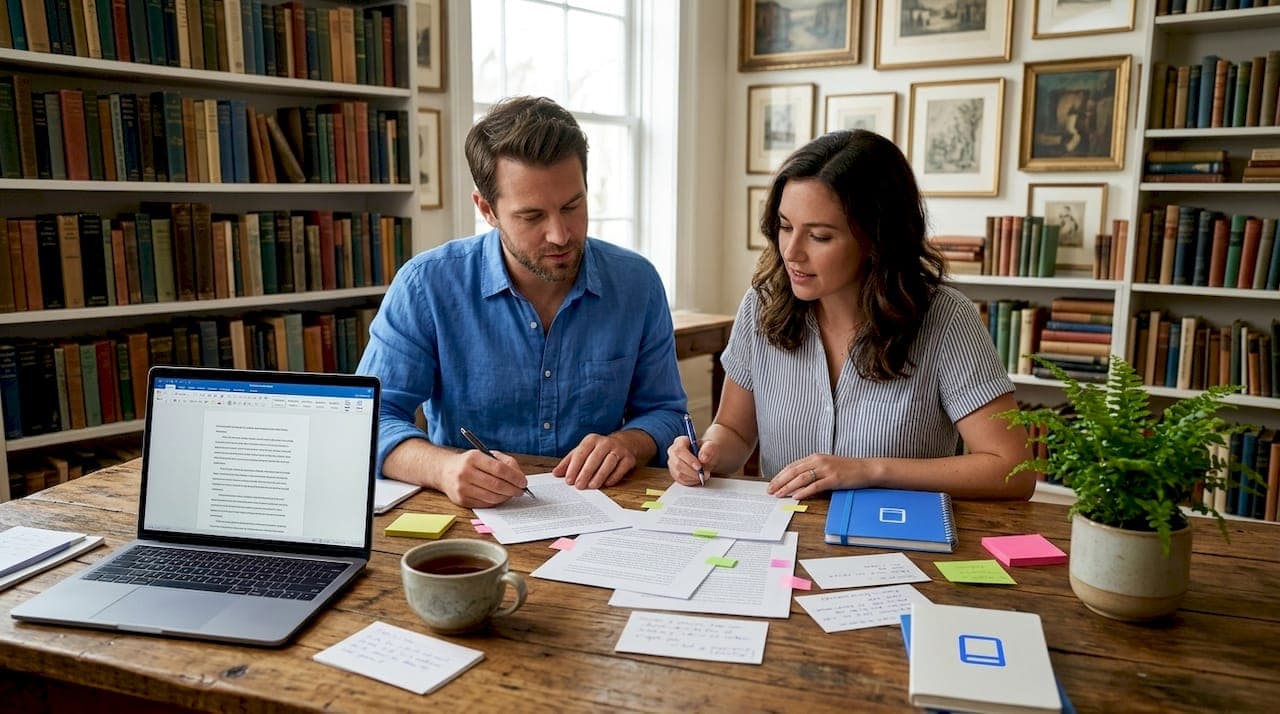
Collaboration in writing is the practice of pooling linguistic knowledge, cognitive resources, and creative perspectives to produce texts that no single writer could achieve alone. Research confirms that joint planning and composing improve writing accuracy and fluency, especially when task complexity is high. The role of collaboration in writing goes beyond dividing labor. It functions as both a cognitive strategy and a creative catalyst. Tools like Google Docs and Grammarly make real-time co-writing more practical than ever, and platforms like Librida are built specifically to support writers through every stage of that shared process.
What is collaborative writing and what methods exist?
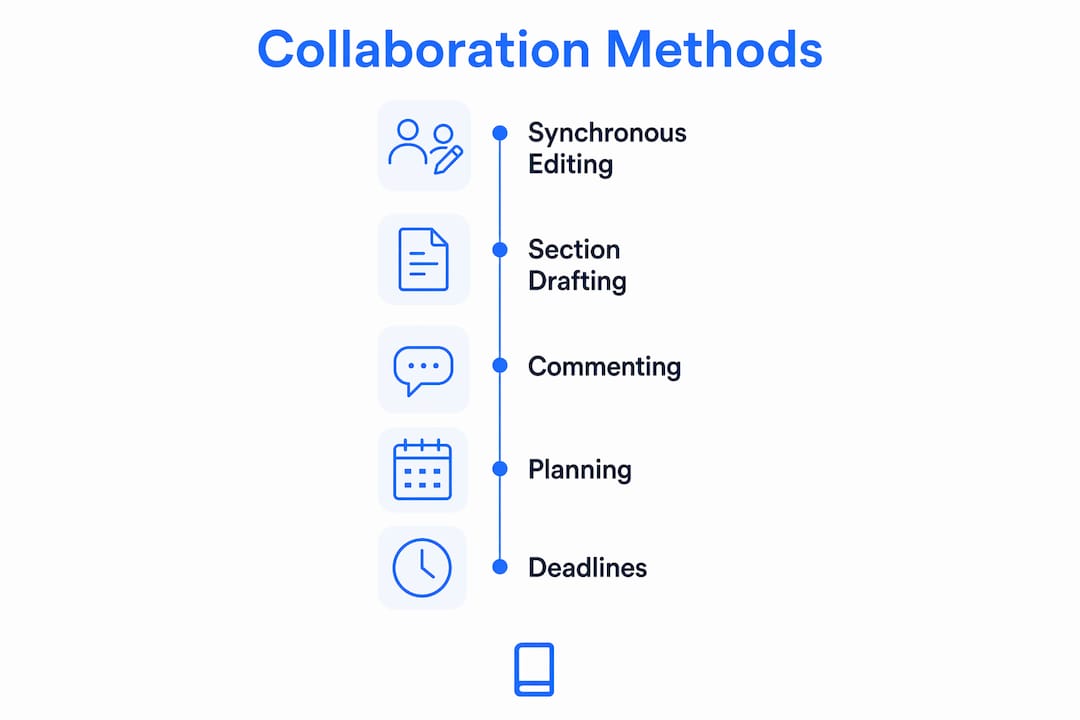
Collaborative writing, also called co-authoring or group writing, describes any process where two or more writers share responsibility for producing a single document. The University of Reading identifies three broad collaborative approaches that cover most real-world writing partnerships. Each approach distributes cognitive and creative work differently, and choosing the right one shapes how smoothly your project runs.
The three core methods are:
- Synchronous shared-document editing. All writers work in the same document at the same time, using tools like Google Docs or Notion. This method maximizes real-time feedback and reduces version conflicts, but it requires strong coordination and can create confusion when multiple voices edit the same passage simultaneously.
- Section-by-section drafting with shared commenting. Each writer owns specific sections, then the group reviews and comments across all sections before integration. This approach suits longer projects like novels or screenplays, where distinct narrative threads need separate attention before being woven together.
- One-person-writes approach. One writer drafts the full text based on group input, while others contribute through notes, outlines, and review cycles. This method produces the most stylistically consistent first draft but risks sidelining contributors who feel their ideas were filtered out.
| Method | Key benefit | Main challenge |
|---|---|---|
| Synchronous shared editing | Immediate feedback loop | Coordination overhead |
| Section-by-section drafting | Clear ownership per contributor | Disjointed voice across sections |
| One-person-writes | Consistent initial voice | Contributor disengagement |
Planning and deadlines are critical in all three methods. Without a shared understanding of goals and timelines, even the most talented writing teams produce disjointed results.
How does collaboration improve writing performance?
The benefits of group writing are not just social. They are neurological. Shared attentional load is one of the most significant mechanisms at work: when two writers tackle a complex scene or argument together, each person carries less cognitive weight, freeing mental bandwidth for higher-order decisions like structure, tone, and narrative logic.
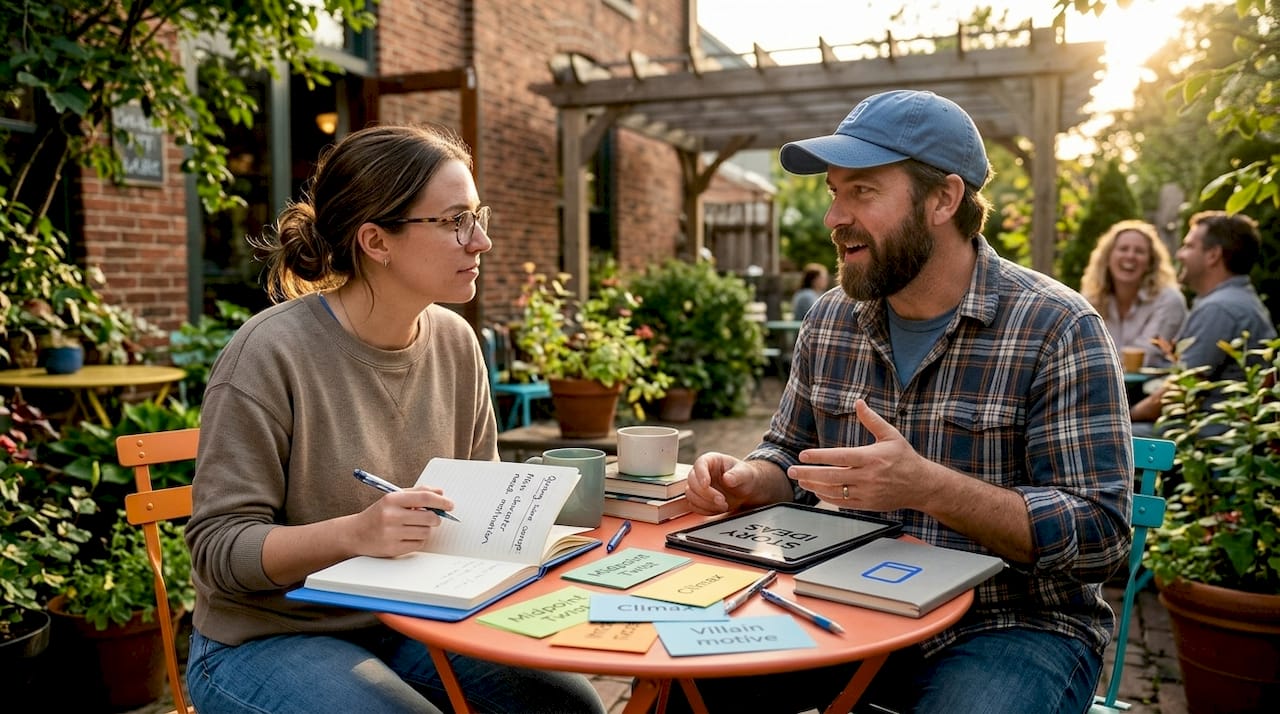
This cognitive relief translates directly into measurable writing improvements. Writers working collaboratively produce more accurate sentences, develop ideas more fully, and catch errors they would miss when working alone. The feedback loop built into any genuine partnership accelerates revision in ways that solo self-editing rarely achieves.
Research published in the Journal of Writing Research in 2026 found that reciprocal collaborative writing, where partners alternate between writing and revising roles, leads to more balanced collaborations and better outcomes than spontaneous or unstructured group work. The structure matters as much as the collaboration itself. When roles are defined and rotation is deliberate, both partners contribute equally and the final text reflects that symmetry.
"Co-authors frequently repeat collaborative drafting, revising, and negotiating cycles to produce a cohesive final document." — PLOS Computational Biology, 2026
For storytellers specifically, the gains are vivid. A writing partner challenges plot assumptions you have stopped questioning. They notice when a character's motivation shifts without explanation. They bring cultural references, emotional registers, or genre knowledge you lack. These contributions do not dilute your story. They sharpen it.
Pro Tip: When co-writing fiction, assign one partner to track character consistency and another to track plot logic during each revision cycle. Separating these responsibilities prevents both from falling through the cracks.
What are the common challenges of collaborative writing?
The most persistent challenge in any writing partnership is maintaining a unified narrative voice. When two writers with distinct styles draft separate sections, the seams show. Readers feel the shift in rhythm, word choice, and sentence structure even when they cannot name it. The University of Reading recommends postponing stylistic editing until the integration phase, when one writer or editor passes through the full manuscript to unify tone. Trying to polish voice too early, while content is still shifting, wastes effort and creates inconsistency.
Beyond voice, collaboration faces three structural challenges that derail more projects than any creative disagreement:
- Negotiation bottlenecks. Research on patterns of collaborative interaction identifies dominant-passive and expert-novice dynamics as the most common sources of imbalance. When one writer consistently overrides the other, the collaboration becomes a solo project with extra steps. Establishing explicit decision-making protocols before the first draft prevents this.
- Workflow misalignment. Writers with different working rhythms, availability, or revision habits create friction that slows the entire project. Agreeing on communication tools, check-in frequency, and deadline structures at the outset removes most of this friction before it starts.
- Feedback that feels personal. Creative writing is emotionally invested work. Critique of a sentence can feel like critique of the person who wrote it. Using comment boxes for recommendations rather than corrections, as the University of Reading advises, keeps feedback constructive and separates the work from the writer's identity.
Pro Tip: Defer all voice and style edits until the final integration pass. During drafting and revision cycles, focus only on content, evidence, and narrative logic. This single rule prevents the most common source of collaborative friction.
Patience and compassion are not soft skills in this context. PLOS Computational Biology research on writing partnerships notes that patience and compassion directly influence whether a collaboration succeeds or collapses. Writers who treat disagreements as problems to solve rather than battles to win produce better books and better working relationships.
How can writers implement effective collaboration in practice?
The difference between a productive writing partnership and a frustrating one usually comes down to setup. Most collaborations fail not because the writers lack talent but because they skip the structural groundwork that makes shared work coherent.
Start with individual preparation. Before your first shared drafting session, each writer should independently develop their understanding of the project: character sketches, plot outlines, thematic intentions, and key scenes they want to write. Individual preparation before co-writing reduces negotiation churn and gives both partners a stronger shared starting point. You spend less time arguing about fundamentals and more time building on them.
Once individual preparation is complete, align on the following before writing a single shared sentence:
- Shared goals. What does a successful final draft look like? Define genre, length, audience, and tone explicitly. Assumptions left unstated become conflicts later.
- Communication tools. Choose one primary platform for drafts (Google Docs works well for most teams) and one for discussion (Slack, email, or a shared project board). Mixing channels fragments decisions and loses context.
- Role assignments. Decide who drafts which sections, who leads revision passes, and who makes final calls on disputed edits. Structured role-switching, as the reciprocal collaborative writing model recommends, prevents one partner from dominating.
- Review deadlines focused on content first. Schedule early review checkpoints that evaluate evidence, narrative logic, and structure. Style and voice come later. The University of Reading's guidance on early content reviews over style-focused edits is one of the most practical pieces of advice for any co-writing team.
For writers working on longer projects, a story planning workflow built before collaboration begins gives both partners a shared map to navigate. It reduces the chance that one writer's chapter contradicts another's without either noticing until late in the process.
You can also explore a deeper breakdown of collaborative writing methods to match your specific project type and team size. Different genres and formats demand different structures, and knowing your options before you start saves significant revision time.
Key takeaways
Collaboration in writing works because it distributes cognitive load, introduces diverse perspectives, and creates structured feedback cycles that solo writing cannot replicate.
| Point | Details |
|---|---|
| Collaboration is cognitive, not just social | Shared attentional load frees mental bandwidth for higher-order writing decisions. |
| Method choice shapes outcomes | Synchronous editing, section drafting, and one-person-writes each suit different project types. |
| Voice unification requires a dedicated phase | Defer stylistic editing to the integration stage to preserve narrative coherence. |
| Structure prevents imbalance | Reciprocal role-switching and explicit decision protocols reduce dominant-passive dynamics. |
| Individual prep reduces friction | Writers who prepare independently before co-drafting negotiate less and build more. |
Why I think most writers underestimate what collaboration actually demands
Most writers approach collaboration the way they approach a group project in school: divide the work, combine the parts, call it done. That approach produces exactly the kind of writing it deserves. Sections that feel like they were written by different people, because they were, with no real integration pass and no shared creative vision holding them together.
What I have found, after working with writers at every level, is that the most effective collaborations treat the partnership itself as a craft. You are not just writing together. You are building a shared creative language, and that takes time and deliberate practice. The writers who skip this step produce technically competent manuscripts that feel hollow at the seams.
The other thing most writers get wrong is feedback. They treat it as a transaction: you critique my chapter, I critique yours, we move on. But the best writing partnerships I have seen treat feedback as a conversation. The goal is not to fix the other person's work. It is to understand what they were trying to do and help them do it better. That distinction changes everything about how critique lands and how the work improves.
I also think the reciprocal model, where you alternate between writing and revising roles, is underused in creative fiction. Most co-authors divide by section and rarely cross into each other's territory. But the writers who regularly revise each other's sections develop a much deeper understanding of the shared voice they are building. The manuscript becomes genuinely collaborative rather than a collection of individual contributions stitched together.
Embrace the friction. Disagreements about a scene or a character's arc are not signs that the collaboration is failing. They are signs that both writers care enough to push back. That tension, handled well, is where the best writing comes from.
— Mikael
How Librida supports your collaborative writing projects

Librida is built for writers who want the benefits of collaboration without the coordination overhead that typically slows creative teams down. The platform combines AI-assisted drafting, shared story planning tools, and integrated editing support so co-authors can work from a single, coherent creative space. Whether you are co-writing a novel with a partner or developing a manuscript with feedback from a writing group, Librida keeps your narrative logic, character details, and revision history in one place. Start your next writing partnership on a foundation that holds. Start writing on Librida and see how structured collaboration changes what you produce.
FAQ
What is the role of collaboration in writing?
Collaboration in writing combines the linguistic knowledge, cognitive resources, and creative perspectives of multiple writers to produce more accurate, fluent, and idea-rich texts than solo writing typically achieves. It functions as both a cognitive strategy and a creative process.
What are the main collaborative writing techniques?
The three primary techniques are synchronous shared-document editing, section-by-section drafting with shared commenting, and the one-person-writes approach. Each suits different project sizes, team dynamics, and genre requirements.
How does collaboration improve storytelling specifically?
A writing partner challenges plot assumptions, catches character inconsistencies, and contributes perspectives the primary author lacks. These inputs sharpen narrative logic and emotional resonance in ways self-editing rarely achieves.
What is the biggest challenge in collaborative writing?
Maintaining a unified voice across multiple contributors is the most persistent challenge. Deferring stylistic editing to a dedicated integration phase, rather than polishing voice during drafting, is the most effective solution.
How do you start a successful writing partnership?
Begin with individual preparation before any shared drafting, then align on shared goals, communication tools, role assignments, and review deadlines focused on content over style. Structured setup prevents most of the friction that derails co-writing projects.