

TL;DR:
- Most writers fail by keeping their ideas scattered, not due to a lack of talent but poor planning.
- A solid story workflow transforms ideas into a manageable structure, maintaining creative energy throughout drafting.
Most writers don't fail because they lack talent. They fail because their ideas stay scattered. You have a premise you love, a character you can hear talking, maybe even a killer ending. But the middle is a fog, and every time you sit down to write, you lose the thread. A solid story planning workflow fixes that. It turns a collection of ideas into a structure you can actually write from, without killing the creative energy that made you want to write in the first place. This guide walks you through everything you need to build one.
Table of Contents
- Key takeaways
- Your story planning workflow: the foundation
- Building a step-by-step story planning workflow
- Common pitfalls and how to fix them
- Evaluating which planning method fits your style
- My honest take on story planning
- How Librida can support your story planning
- FAQ
Key takeaways
| Point | Details |
|---|---|
| Start with premise and goal | Anchor your planning to what your protagonist wants and what stands in their way. |
| Use flexible frameworks | Beat sheets and three-act structure guide your story without locking you into a formula. |
| Map character arcs to plot | Every major plot point should trigger or reflect an emotional shift in your protagonist. |
| Treat outlines as living documents | Revise your plan as the story develops, not just before you start writing. |
| Match method to your style | Pantsers, plotters, and hybrids all need different levels of detail in their planning. |
Your story planning workflow: the foundation
Before you open a blank document and start outlining, you need to know what you're planning. That sounds obvious, but most writers skip this and end up building a structure around an idea that isn't fully formed yet.
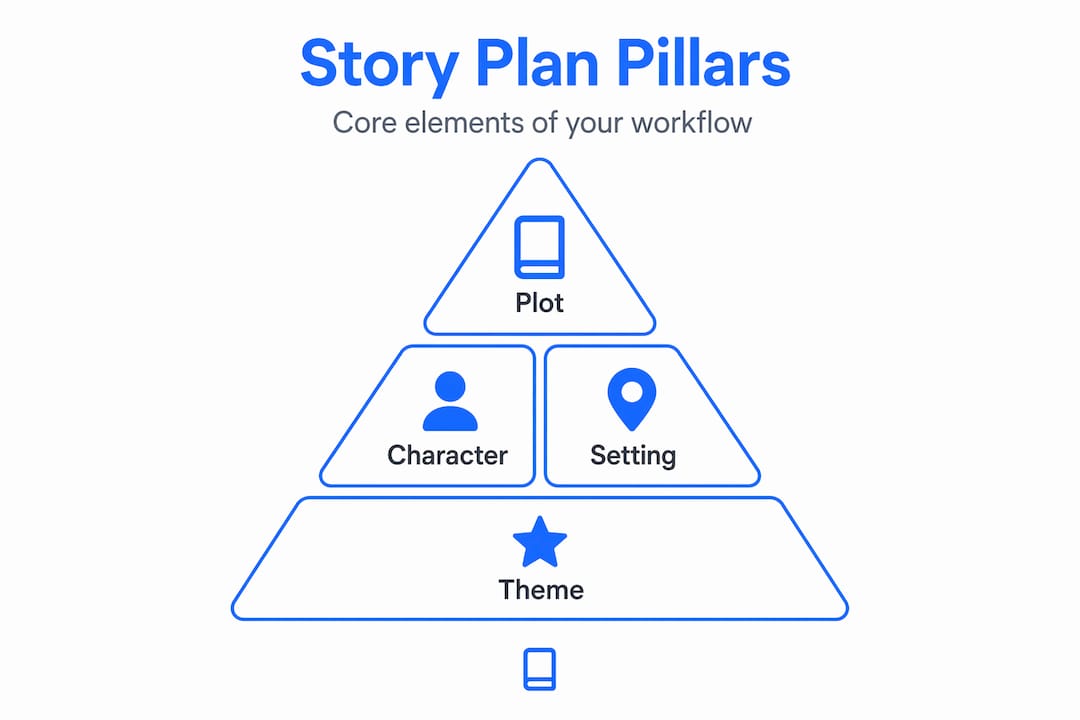
The four pillars of any story plan are plot, character arc, setting, and theme. You don't need all four fully developed before you begin, but you need to know which ones you understand clearly and which ones still have holes. Character arc, in particular, is where a lot of early outlines fall apart. Mapping from character goals to plot events creates tighter stories where emotional stakes actually drive what happens next.
Choosing your planning approach
There are three broad camps when it comes to story planning, and understanding them helps you pick the right tools:
- Pantsers write by instinct. They may jot down a few key moments but largely discover the story as they draft. Light planning works best here: a premise, a protagonist's goal, and maybe a loose ending.
- Plotters map everything in advance. They want chapter-by-chapter outlines, scene lists, and character arcs sketched out before writing word one.
- Hybrid writers sit between both. They plan the major structural turns but leave room for discovery in between.
Planning methods span from scene-by-scene breakdowns to minimal major beats. Neither extreme is wrong, but knowing your instinct tells you which tools to actually use.
Popular frameworks to know
Three frameworks come up again and again for good reason:
- The three-act structure divides your story into setup, confrontation, and resolution. It's the backbone of almost every popular narrative in fiction and film.
- The Snowflake Method starts with a single sentence premise and expands it step by step into a full outline. It's especially useful for writers who feel overwhelmed by the blank page.
- Save the Cat beat sheet is the most specific of the three. This tool divides stories into 15 key beats, with precise timing: the Catalyst arrives around page 12, the Midpoint sits at the 50% mark, and "All Is Lost" hits near 75%.
Pro Tip: Don't feel obligated to use all three. Pick one framework as your primary structure and treat the others as supplementary checkpoints.
For tools, a basic setup works fine: a word processor, a spreadsheet for chapter tracking, and either index cards or a tool like Scrivener for scene shuffling. Some writers swear by physical notebooks for early planning. Use whatever reduces friction between thinking and writing.
Building a step-by-step story planning workflow
Here's where the story development process gets concrete. These narrative planning steps are meant to be worked through in order, though you'll loop back as new ideas emerge.
-
Write your premise sentence. State what your story is about in one sentence: who the protagonist is, what they want, and what obstacle stands in their way. If you can't do this yet, your planning will drift.
-
Define your protagonist's end goal. What does your character need by the end of the story, emotionally and externally? Working backwards from a character's end goal helps map the emotional shifts needed in every scene along the way.
-
Identify your five major plot points. These are the turning points your story pivots on: the Inciting Incident, the First Plot Point (where the protagonist commits to a path), the Midpoint (a major revelation or reversal), the Crisis, and the Climax. Mark these before filling in anything else.
-
Map your character arc alongside the plot. For each of your five major plot points, note what your protagonist believes at that moment. Their internal belief should shift progressively. If it doesn't change between plot points, those scenes are likely doing the same emotional work twice.
-
Apply a beat sheet to sequence the beats between your major points. This is where Save the Cat earns its reputation. Beat sheets function as adaptable roadmaps, not rigid constraints. Use them to find the rhythm between your structural turns without forcing your characters into unnatural reactions.
-
Build a chapter-level or scene-level outline. Once your major beats are in place, break the space between them into individual scenes. For each scene, note the viewpoint character, the scene's purpose, and what changes by the end of it. Specifying viewpoint character and scene purpose in each entry aids pacing across longer manuscripts.
-
Update the outline as you draft. Your plan is a starting point, not a contract. The outline you finish with should reflect what the story actually became, not just what you initially imagined.
Pro Tip: If a scene in your outline doesn't change anything, cut it from the plan before you write it. Every scene should shift the story's direction, a character's belief, or the reader's understanding.
| Step | Focus | Output |
|---|---|---|
| Premise sentence | Story concept | One-sentence story summary |
| Major plot points | Structure | Five turning points mapped out |
| Character arc | Emotional journey | Belief shift at each plot point |
| Beat sheet | Rhythm | 15 beats placed between turning points |
| Chapter outline | Execution | Scene list with purpose and POV |
Common pitfalls and how to fix them
Even a good story planning workflow can go sideways. These are the problems writers hit most often, along with honest fixes.

Over-outlining. This one is sneaky because it feels productive. You're writing, you're planning, you're working. But over-outlining can become procrastination disguised as preparation. If you've rewritten your outline three times and still haven't drafted chapter one, stop planning and start writing. The outline is good enough.
Under-planning. The opposite failure is starting to draft with only a vague sense of direction. Without narrative planning steps in place, plots wander and pacing breaks down around the middle. Most writers hit the "sagging middle" because they planned the beginning and ending but left the connective tissue undefined. Catching weak plot points before drafting saves significant revision time later.
Character arcs that don't align with plot events. This is the most common structural problem in first drafts. Your protagonist changes, but the external events don't actually cause or reflect that change. Go back to your outline and ask: what happens in the story that forces this character to revise their belief? If you can't answer that, you're missing a scene.
Refusing to revise the outline. Some writers treat their outline like a finished product. They draft content that contradicts the plan and force their story back into the original structure, even when the new direction is clearly better. Reverse outlining after a discovery draft is a legitimate strategy. Write what comes, then build a new outline from what you've drafted to identify structural problems.
"Beat sheets are most powerful as diagnostic tools during revision. Map your finished draft to the beats to find where narrative momentum drops or your characters stall." Save the Cat Beat Sheet for Screenwriters
Planning paralysis. Sometimes the problem isn't the method, it's anxiety. No outline feels complete enough to start. The fix is simple: set a planning deadline. Give yourself two weeks to outline, then draft regardless of how ready the plan feels. Stories rarely start in the outline anyway.
Evaluating which planning method fits your style
Choosing between plot structuring techniques is not about finding the "best" method. It's about finding the one that matches how your brain works.
| Method | Best for | Limitation |
|---|---|---|
| Save the Cat beat sheet | Writers who need clear story rhythm | Can feel formulaic for literary fiction |
| Snowflake Method | Writers overwhelmed by blank-page planning | Time-intensive at early stages |
| Three-act structure | All writer types as a foundational map | Too broad without additional scene-level planning |
| Reverse outlining | Discovery writers / pantsers | Requires completing a full draft first |
| Scene list with purpose notes | Plotters and hybrid writers | Demands significant upfront planning time |
If you're a pantser, resist the pressure to outline at chapter level. A one-page document with your premise, your protagonist's goal, and your five major plot points gives you enough structure to avoid total drift while leaving room for discovery. If you're a plotter, use a beat sheet to check your scene list before drafting. Beat sheets adapted to fit your story rather than applied rigidly will keep your characters feeling real instead of mechanically moved from plot point to plot point.
Hybrid writers benefit most from mixing methods. Use the three-act structure to see your big picture, the beat sheet to map the emotional rhythm, and a scene list to plan chapters you feel uncertain about while leaving open the ones where you're confident.
Pro Tip: As you gain experience, your planning instincts improve. What required a full chapter outline in your first manuscript might only need bullet points in your third. Let the method evolve with you.
For those who want a detailed walkthrough of how to develop story ideas from raw concept into a workable outline, there are structured approaches designed specifically for writers at the early stages of their story development process.
My honest take on story planning
I spent years believing that a better outline would make me a better writer. I added columns to my spreadsheets, color-coded my beat sheets, and drew elaborate character maps. And then I'd sit down to draft and feel nothing.
What I've learned is that outlines are living documents, and treating them like finished work is the mistake that kills momentum. The plan exists to serve the story, not the other way around. When a chapter takes a direction I didn't anticipate, and the new direction is genuinely better, the right response is to update the outline and keep writing. Not abandon the plan entirely. Not force the story back into the original structure. Update it.
What actually changed my storytelling wasn't finding a better framework. It was understanding that the structure you outline is a hypothesis. You think your story works this way. Drafting tests that hypothesis. Revision uses the results.
The writers I've seen struggle the longest are the ones who want certainty before they start. Planning gives you direction. It doesn't give you certainty. That discomfort is not a sign your workflow is broken. It's what writing actually feels like, even when everything is working.
— Mikael
How Librida can support your story planning
Building a story planning workflow from scratch takes time, especially if you're writing your first manuscript and still figuring out which methods work for you.
Librida was built specifically for writers who need more than a blank document. The platform offers AI-assisted planning tools that help you shape premises, map character arcs, and build structured outlines without staring at an empty page wondering where to start. Whether you're stuck at the premise stage or trying to untangle a messy middle, Librida's templates and AI-guided features help you move forward.
If you want a focused resource that takes you from idea to published book using AI-powered workflows, the AI-Powered Success book by Librida covers the full story development process, from planning your first outline to producing a manuscript ready for publishing. It's built for aspiring writers who want practical tools, not theory.
FAQ
What is a story planning workflow?
A story planning workflow is the process a writer uses to organize their ideas into a structured plan before and during drafting. It typically includes defining a premise, identifying major plot points, mapping character arcs, and building a scene-level outline.
How do I choose between pantsing and plotting?
Base your choice on how you work best under pressure. If rigid plans kill your creativity, use a light outline with just your major turning points. If you lose direction without structure, invest in a detailed scene list before drafting.
Can I change my outline while writing?
Yes, and you should when the story calls for it. Outlines are living roadmaps that should be revised as your draft evolves. Forcing your story back into an outdated plan is one of the most common causes of flat, mechanical writing.
What is the Save the Cat beat sheet?
The Save the Cat beat sheet is a story structure tool that divides narratives into 15 beats with specific timing, including a Catalyst at around 12%, a Midpoint at 50%, and an "All Is Lost" moment near 75%. It works across fiction and film as a rhythm guide.
How detailed should my story outline be?
It depends on your writing style and the complexity of your project. Most writers benefit from a plan that covers the five major plot points and a rough scene list per act. More detailed outlines help for complex plots with multiple storylines.